Last updated November 17, 2026



Free written scope consultation - allowances, timeline, and change-order rules on paper before a single trade is scheduled
The Complete Fence Installation Guide for El Monte Homeowners
In Los Angeles County, a fence installed six inches over the property line without your neighbor’s written consent can be ordered removed at your expense. No exceptions. No grandfather clause. That one fact catches more El Monte homeowners off guard than any other, and it’s why we wrote this guide the way we did – around the rules, the review process, and the paperwork, not just the lumber.
Most fence guides tell you how tall to build and what material looks nice. That’s the easy part. What actually sinks a fence project in El Monte is a permit you didn’t know you needed, a property line you guessed wrong on, or an HOA board that rejects the color after the posts are already in the ground. You’ll learn exactly how El Monte regulates fence height by zone, which fences legally require a permit, why a survey beats every shortcut, and how the San Gabriel Valley’s dry heat and termite pressure should change your material choice.
Quick Answer
Fence installation in El Monte usually requires a permit for anything over six feet, and that permit is tied to your zone – front, side, rear, or corner lot – each with its own height limit. Before any post gets dug, confirm your property line with a licensed survey, check your HOA’s architectural rules, and verify your fence type against El Monte’s building requirements. Doing those three things first is what separates a fence that lasts from one removed at your cost.
Styles & brands we work with
- Kitchen remodeling
- Bathroom remodeling
- Home additions & ADU
- Roofing
- Windows & doors
- Driveway & pavers
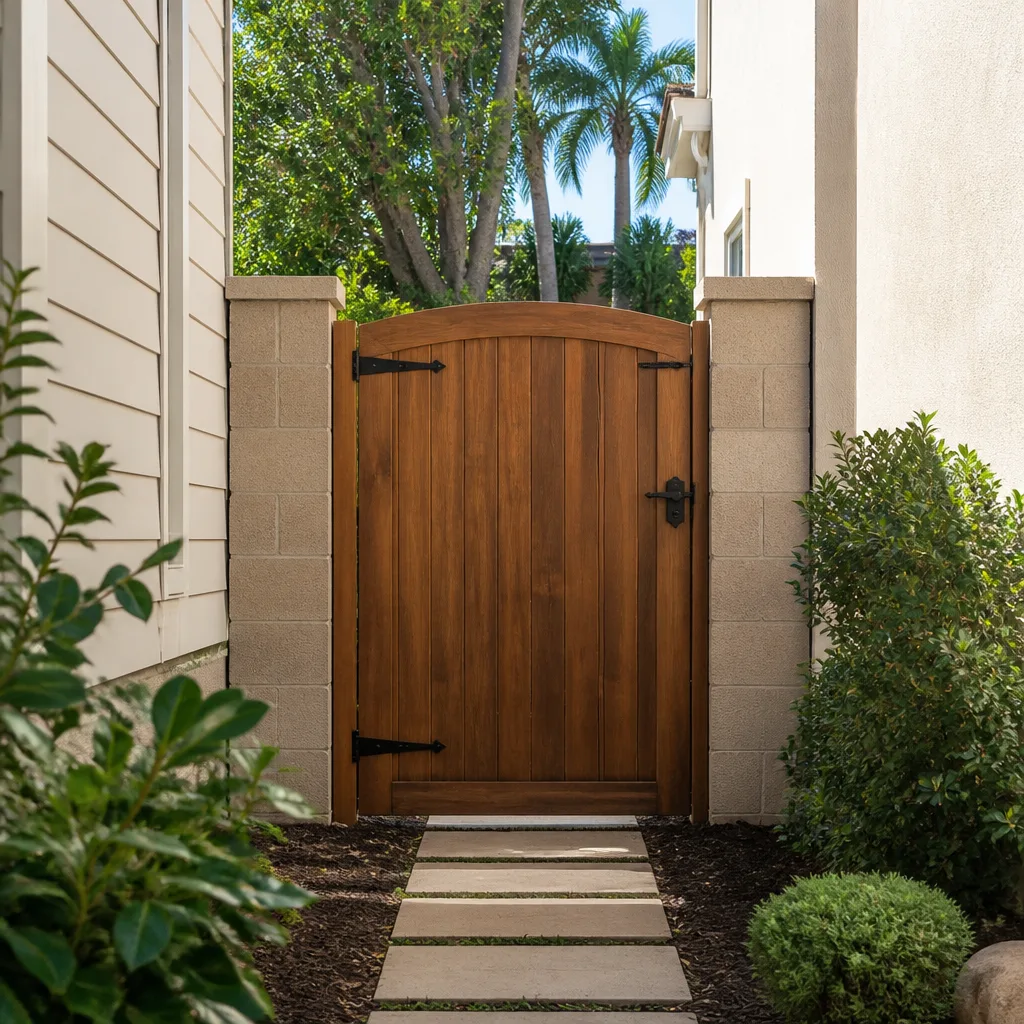
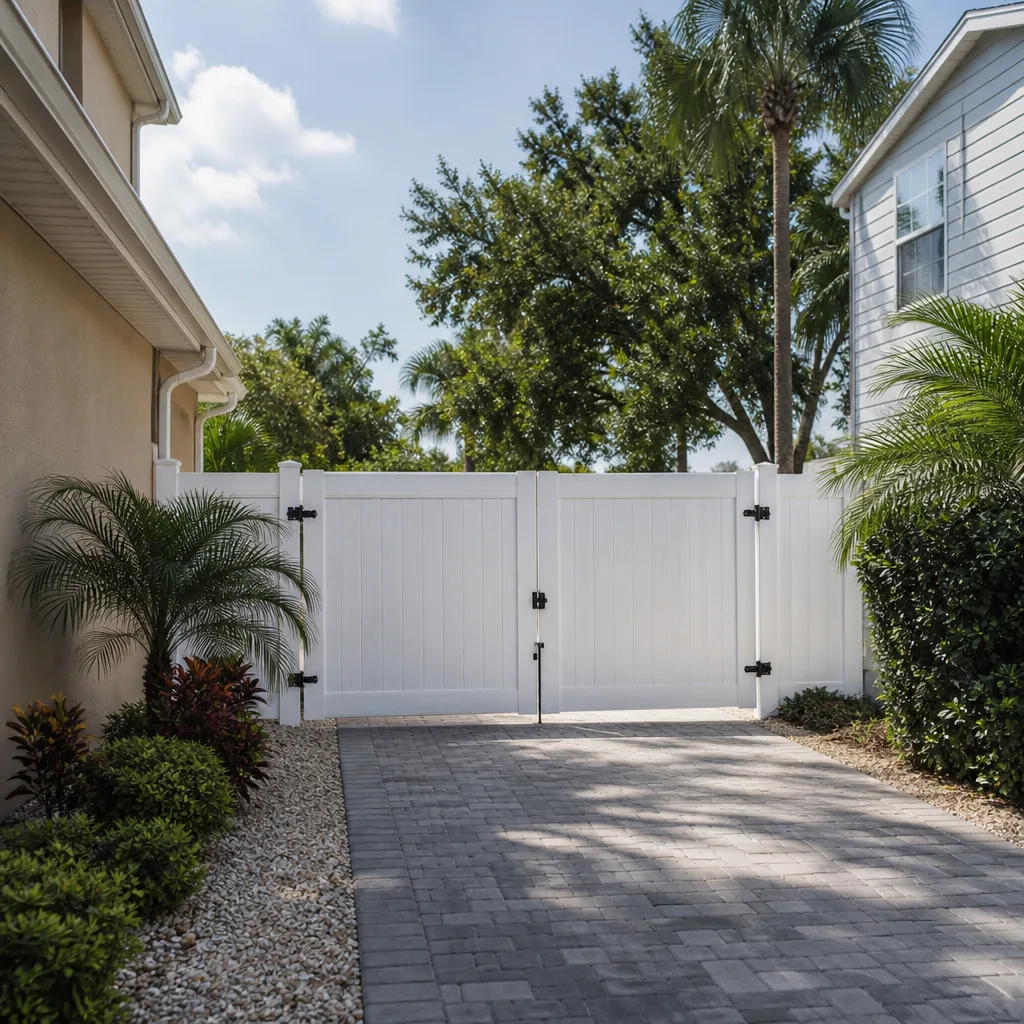
- Fence
Table of Contents
- El Monte Fence Height Limits by Zone
- How to Pull a Fence Permit in El Monte
- Property Line Verification: Why a Survey Matters
- Material Selection for the San Gabriel Valley Climate
- When City Code and Your HOA Conflict
- Corner Lot Rules That Catch Homeowners Off Guard
- How Long Does a Fence Installation Take?
- What Does Fence Installation Cost in El Monte?
We’re Groundwork Construction Co. of El Monte home, and fence work is one of seven core services we handle across El Monte. We’ve walked enough properties here to know the regulatory part is where most projects either go smoothly or fall apart. Our technicians have up to 12 years of experience, every job is covered by our 730-Day Done Right Promise, and a live person answers the phone any hour, any day. That matters when your neighbor’s lawyer calls on a Sunday.
El Monte Fence Height Limits by Zone
El Monte sets fence height limits by where the fence sits on your lot, not by what material it’s made of. The rules are straightforward once you understand the four zones, but they’re easy to get wrong if you’re standing in your yard guessing.
Here’s the breakdown as it typically applies under El Monte and Los Angeles County standards:
- Front yard: Generally limited to 3 to 4 feet within the front setback, measured from finished grade. Anything taller usually needs a permit and, in some cases, a variance.
- Side yard: Often 6 feet, measured behind the front setback line. This is the zone most homeowners push the limit on.
- Rear yard: Typically up to 6 feet without a permit, with taller fences requiring an approved permit and sometimes neighbor notification.
- Corner lots: The tricky one. Corner lots often have a “sight triangle” restriction at the intersection corner where fences must stay low – sometimes 3 feet or less – so drivers can see through the corner. Plant a 6-foot fence there and you may be ordered to cut it down.
A few details matter here. Height is measured from the finished grade, not from the top of a retaining wall or a slope. If your property slopes, that changes the effective height at every post. El Monte’s mix of older flat-lot homes and sloped properties near the hills means the same 6-foot fence can measure very differently at the back corner than at the front gate.
Before you buy materials, pull your parcel’s zoning and check the specific height limit for your zone. If you’re near a corner, you’ll also want to look at the sight-distance triangle. More on that in the corner lot section below.
One more thing builders learn the hard way: an El Monte code inspector measures the fence, not your intent. We’ve seen homeowners build to “close enough” and then pay twice – once to build it, once to modify it after a complaint.
How to Pull a Fence Permit in El Monte
Not every fence in El Monte needs a permit. But the ones that do will get flagged, and building without one is a fast route to a stop-work order. Here’s how to tell whether your fence crosses the line and what the process looks like when it does.
Which fences typically require a permit in El Monte:
- Any fence over 6 feet in height
- Fences taller than the front yard limit within the front setback
- Masonry, block, or retaining-wall-backed fences of any significant height
- Fences placed in a required sight-distance area on a corner lot
- Fences serving a pool area, which have their own separate requirements
The step-by-step permit process:
- Confirm your zoning and lot lines with the city planning department, or have a surveyor do it for you.
- Prepare a simple site plan showing where the fence sits on your lot, its height, its material, and the distances from property lines.
- Submit the fence permit application along with the site plan and any HOA approval documentation.
- Pay the permit fee, which in El Monte typically runs a few hundred dollars depending on scope and fence type.
- Schedule the required inspection once the fence is installed – inspectors check height, setbacks, and structural integrity.
Fencing isn’t plumbing; the permit process is manageable. But the site plan is where most DIY applications stall. The city needs to see exactly where the fence sits relative to the property line, and a rough sketch won’t cut it. If you’re not confident in your reading of the lot, a surveyor is cheaper than a rejected application and a redo.
We pull permits as a matter of course on every Fence Installation in El Monte project, and we walk inspections through to a pass. The permit is part of the job, not an add-on, and it protects you when you sell the house. An unpermitted fence is a title issue, and title issues cost money at closing.
If your project includes gates, columns, or pavers under the fence line, coordinate those with the fence permit. We handle that alongside our Driveway & Pavers in El Monte work when a homeowner is redoing the front of the property all at once – one permit window, one crew, one clean finish.
Property Line Verification: Why a Survey Matters
The single most expensive fence mistake in El Monte isn’t bad material or a sloppy install. It’s building on the wrong side of the property line. A licensed survey is the only reliable way to know where your line actually falls, and here’s why every shortcut shortchanges you.
Why a neighbor agreement doesn’t protect you. A friendly handshake with the neighbor across the fence feels like permission. It isn’t. Verbal agreements aren’t binding on future owners, they don’t survive a sale, and they offer zero protection if a new neighbor moves in and disputes the fence. Written neighbor consent is better than nothing, but it still doesn’t establish where the line legally sits – it just documents that the neighbor didn’t object at the time.
Why a GIS map printout isn’t enough. County GIS maps are useful for orientation and rough measurements. They are not survey-grade. The lines on a GIS map can be off by feet, not inches. Build a fence off a GIS printout and you have no legal leg to stand on if you’re over the line.
What a survey actually does. A licensed land surveyor locates the corners of your parcel using recorded plats and physical monuments, then stakes the line on the ground. That staked line is what you build to. It’s the only defensible record if a dispute ever arises, and in Los Angeles County, “adverse possession” claims have been upheld after a fence sat over a line long enough. That means building over the line isn’t just a risk today – it can quietly make your fence someone else’s property over time.
Here’s the practical recommendation: if the fence is going exactly on the property line, get a survey. If you’re building well inside your line with a comfortable setback, the risk drops, but it doesn’t disappear. In our experience working properties throughout El Monte, the survey is the cheapest insurance in the whole project. It’s a few hundred dollars. Removing and rebuilding a fence that steps onto a neighbor’s land can run into the thousands.
Material Selection for the San Gabriel Valley Climate
El Monte’s climate asks a lot of a fence. Long dry summers, hard sun, periodic Santa Ana wind events, and a real termite presence in the San Gabriel Valley. The material that looks great on a Pinterest board may not survive ten years here without intervention. Here’s how the main options actually hold up.
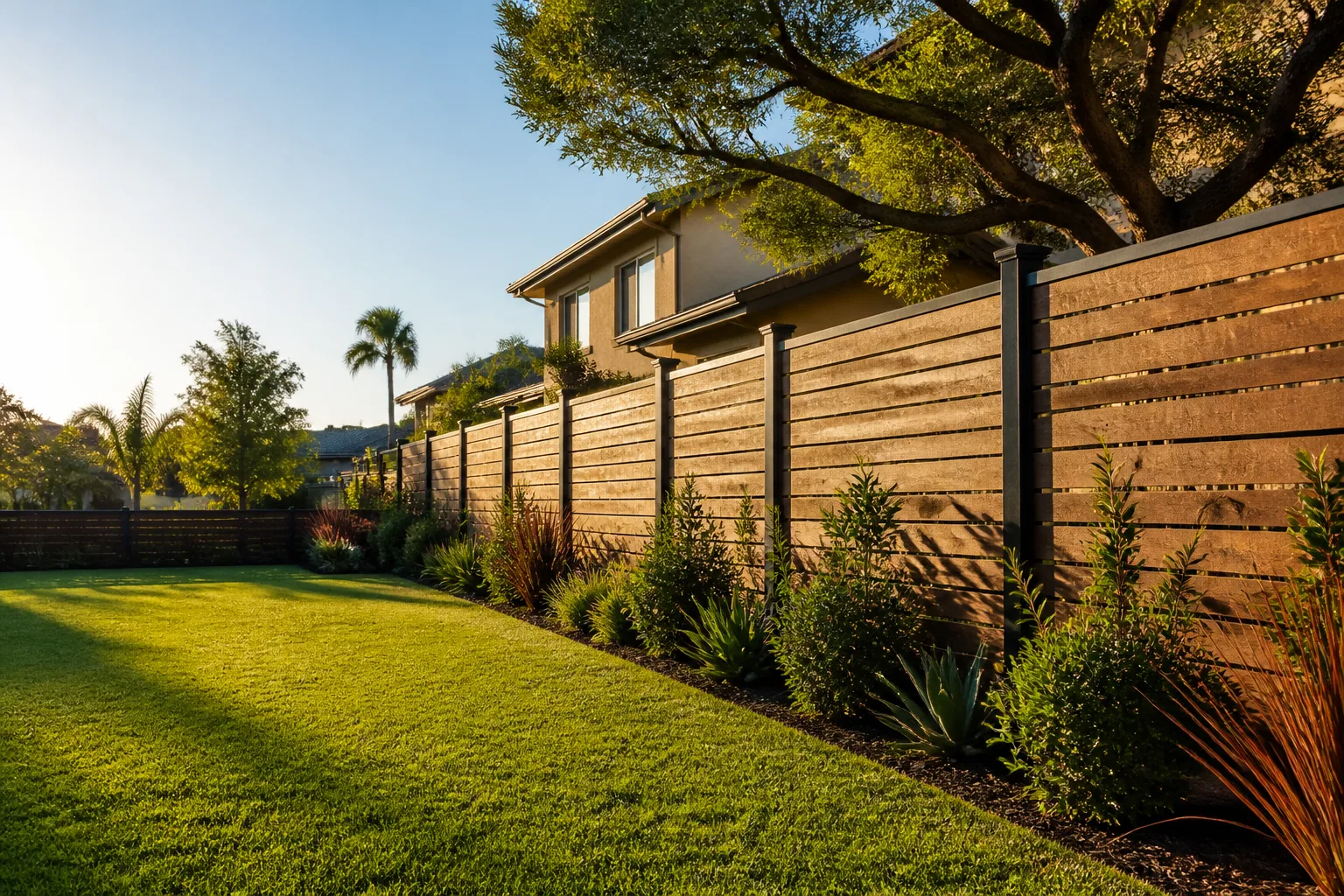
Wood (cedar, redwood, or pressure-treated pine):
- Classic look, and cedar and redwood age beautifully in dry heat.
- Termite pressure is the real threat. El Monte’s warm, dry conditions are hard on wood, and subterranean termites are active throughout the SGV. Pressure-treated pine helps, but any wood fence near soil contact needs regular inspection.
- Requires staining or sealing every two to three years to fend off sun damage. Skip it and the wood greys, checks, and weakens.
- Santa Ana wind load is a real consideration. Wood fences need well-set posts and proper bracing to survive a wind event.
Vinyl:
- Handles the dry heat well and doesn’t feed termites. That alone makes it worth considering in El Monte.
- Can get brittle in extreme heat over time, and cheaper vinyl has a real fade problem in full sun. Buy from a reputable manufacturer, not the thinnest panel on the shelf.
- Low maintenance – a rinse now and then, no staining.
- Wind load still matters. A vinyl fence catches wind like a sail and needs solid posts just like wood.
Metal (wrought iron, aluminum, steel):
- Best choice for wind resistance, longevity, and low maintenance in the SGV climate.
- Termite-proof, doesn’t rot, doesn’t need staining.
- Powder-coated finishes hold up well in the sun. Bare steel will rust, so finish quality matters.
- Higher upfront cost than wood or vinyl, but the service life usually justifies it.
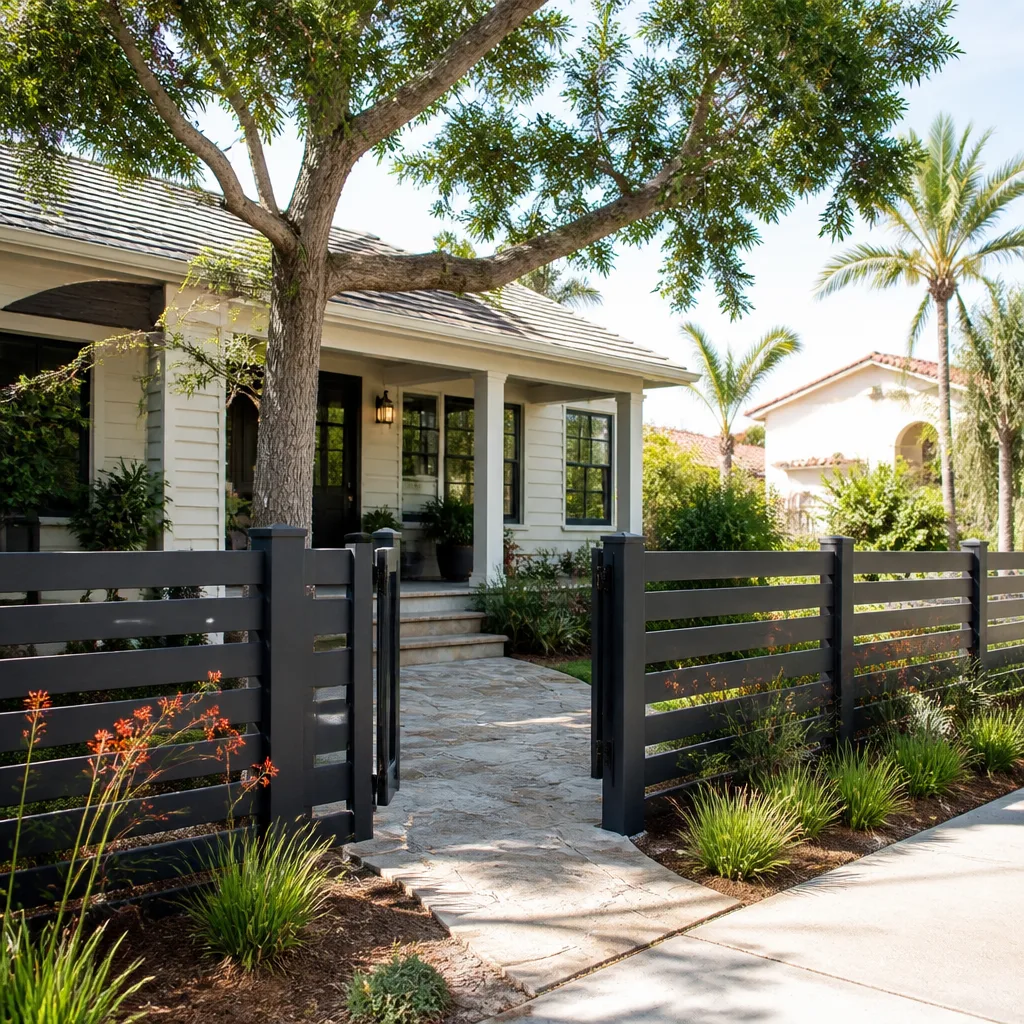
- Pairs naturally with masonry columns or a stone base for a look that fits the older homes in El Monte.
A note on the “cool” materials: modular and prefab construction brands like Mighty Buildings and Boxabl have made headlines for faster builds, but they’re never the right call for a fence. Fence material comes down to how it handles sun, wind, termites, and moisture – and that’s a question you answer with cedar, vinyl, or metal, not a prefab panel.
For most El Monte homeowners, the smart call is wood in the rear yard (where appearance matters most and wind exposure is lower), vinyl or metal on the street-facing side, and metal everywhere if wind and termites are your two biggest worries. We walk every property and recommend based on the actual exposure, not a one-size-fits-all list.
When City Code and Your HOA Conflict
Here’s the part that surprises homeowners most: your HOA can be stricter than El Monte’s city code, and when it is, the HOA governs. City code sets the outer limit. Your HOA sets the rule you actually live under.
The reverse is also true. The city can require something your HOA dislikes – a sight-distance restriction on a corner lot, for instance – and you still have to satisfy the city. You can’t use your HOA’s approval to skip a city permit, and you can’t use your permit to override a valid HOA restriction. Both apply.
What the HOA typically controls:
- Fence height, often stricter than city code (many HOAs cap rear-yard fences at 6 feet, and some cap front-yard fences lower)
- Material and color – vinyl may be allowed while wood is restricted, or vice versa, or a specific color palette is required
- Style and design – capped vs. uncapped, picket spacing, column treatment
- Setbacks from the property line
- The architectural review and approval process, which usually needs a completed form and often a drawing before work starts
The order of operations matters. Get HOA approval first. The architectural review committee can take weeks, and if you build before the approval comes through, the HOA can require you to tear it down and rebuild at your expense – even if El Monte issued you a permit. That’s a painful lesson and an avoidable one.
If your HOA and the city seem to conflict, call your HOA board and ask which rule they enforce, then confirm with the city planning department. Usually there’s a clear answer. When there isn’t, your plan should meet the stricter of the two. That’s what passes every time.
We’ve handled the HOA paperwork as part of fence and Home Additions & ADU in El Monte projects that touch shared lines and setbacks, and the pattern is the same: approval first, build second.
Corner Lot Rules That Catch Homeowners Off Guard
Corner lots in El Monte come with a rule most homeowners never heard of: the sight-distance triangle. It’s a wedge-shaped area at the intersection corner where fences, hedges, and structures must stay low so that drivers approaching the intersection can see oncoming traffic and pedestrians. Build tall there and the city can order you to modify it.
The typical sight triangle runs roughly 15 to 25 feet along each street from the corner, and within that triangle, fence height is often capped at 3 feet or less. The exact dimensions depend on the street classification. A local residential street has a smaller triangle than a collector or arterial road.
Why this catches people: a homeowner sees a 6-foot fence they want for privacy, builds it, and three months later gets a code complaint from a neighbor – or worse, from the city after a traffic safety review. Removal follows. The fence looked fine, measured fine off the front of the house, and still failed because the corner triangle was never accounted for.
A second corner-lot complication: the “front” of the property is often two sides. Some El Monte corner properties have a front-yard rule on both street-facing sides, which can mean low height limits on two full stretches of fence. This is exactly the kind of detail a survey and a zoning check surface before any post goes in.
If you’re on a corner, do this before you buy: pull the sight triangle dimensions for your intersection from the city, mark the triangle on the ground with string, and plan the fence around it. It’s an hour of work that prevents a rebuild.
How Long Does a Fence Installation Take?
A typical residential fence in El Monte goes up in one to three days for a straight run with no complications. Corner lots, sloped lots, HOA review time, and permit turnaround add to that. Here’s the realistic timeline:
- Survey (if needed): 1 to 2 weeks to schedule and receive a staked line.
- HOA architectural review: 2 to 4 weeks, often longer, depending on the board’s meeting schedule.
- Permit application and issuance: 1 to 3 weeks for a straightforward fence, longer if variances are involved.
- Installation: 1 to 3 days for most residential runs. Concrete post footings need a day to cure before panels go up in some cases.
- Final inspection: 1 to 2 weeks to schedule after completion.
The big takeaway: most of the calendar time lives in approvals, not in building. Start the HOA and permit steps first. The install itself is fast.
What Does Fence Installation Cost in El Monte?
Fence costs in El Monte depend on material, linear footage, height, and how much of the project is regulatory work – surveys and permits. Here’s a line-item range for planning purposes. Treat these as typical market ranges, not a quote. Your property has its own variables.
- Wood (cedar or pressure-treated pine): $35 to $55 per linear foot installed
- Vinyl: $40 to $65 per linear foot installed
- Wrought iron or aluminum: $55 to $95 per linear foot installed, higher for custom design
- Masonry or block wall: $65 to $120 per linear foot installed, depending on height and finish
- Survey (if needed): $500 to $1,200 depending on lot size
- Permit fees: $150 to $400 typical for a standard residential fence
- Gate hardware and installation: $250 to $800 per gate
A simple 100-foot wood fence in El Monte often lands in the $4,000 to $5,500 range installed, permits and survey excluded. Vinyl and metal push that number up. If you’re fencing a full perimeter with a gate and a corner lot restriction, plan for more.
We price every Fence Installation in El Monte project upfront, with the number you see being the number you pay – no change-order surprises after the crew arrives. And because fence work often pairs with other front-of-property improvements, our Driveway & Pavers in El Monte and Home Additions & ADU in El Monte teams routinely coordinate on jobs where the fence, driveway, and site work are done together under one plan. That coordination saves permits, time, and money compared to hiring each trade separately.
Common Mistakes to Avoid
- Building to the property line based on a GIS map. GIS lines are orientation tools, not survey lines. Build off them and you can end up over the line – and legally on the hook to remove at your expense.
- Skipping HOA approval and starting anyway. The HOA can order you to tear down and rebuild even after the city approves the fence. Get HOA sign-off first, in writing.
- Ignoring the corner sight triangle. Corner lots in El Monte have a low-height wedge at the intersection. A 6-foot fence in that zone is a code violation, not a gray area.
- Choosing wood without considering termites. The San Gabriel Valley has real termite pressure. Wood is fine if it’s pressure-treated and inspected, but going wood on autopilot in El Monte is a cost many homeowners regret.
- Measuring height from a slope or retaining wall. El Monte measures from finished grade. A sloped lot can make a legal 6-foot fence effectively taller – or shorter – than intended.
- Skipping the permit on a “small” job. A stop-work order and a redo cost more than the permit ever would, and an unpermitted fence becomes a title problem when you sell.
- Starting before the survey. The survey is cheap insurance. Removing and rebuilding a fence that crossed a line costs thousands – and can hand your fence to a neighbor after enough time.
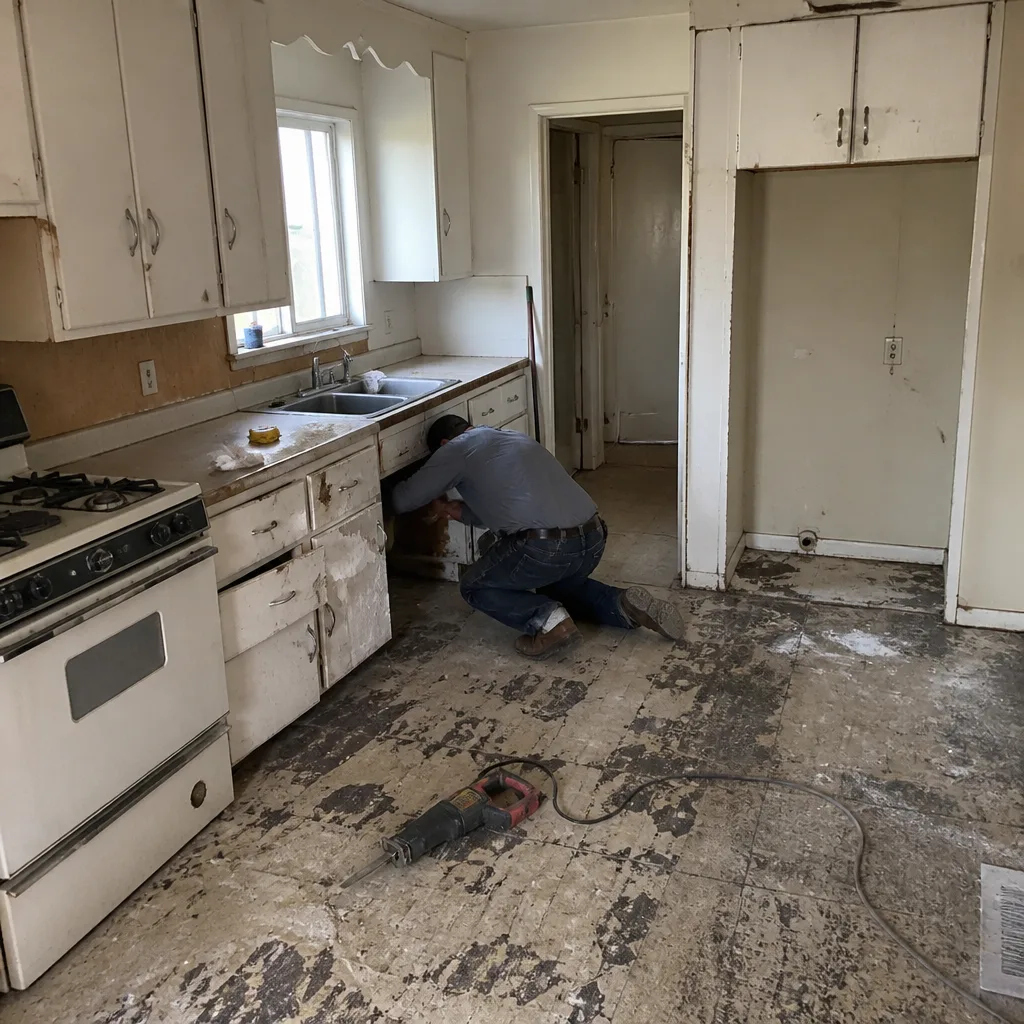
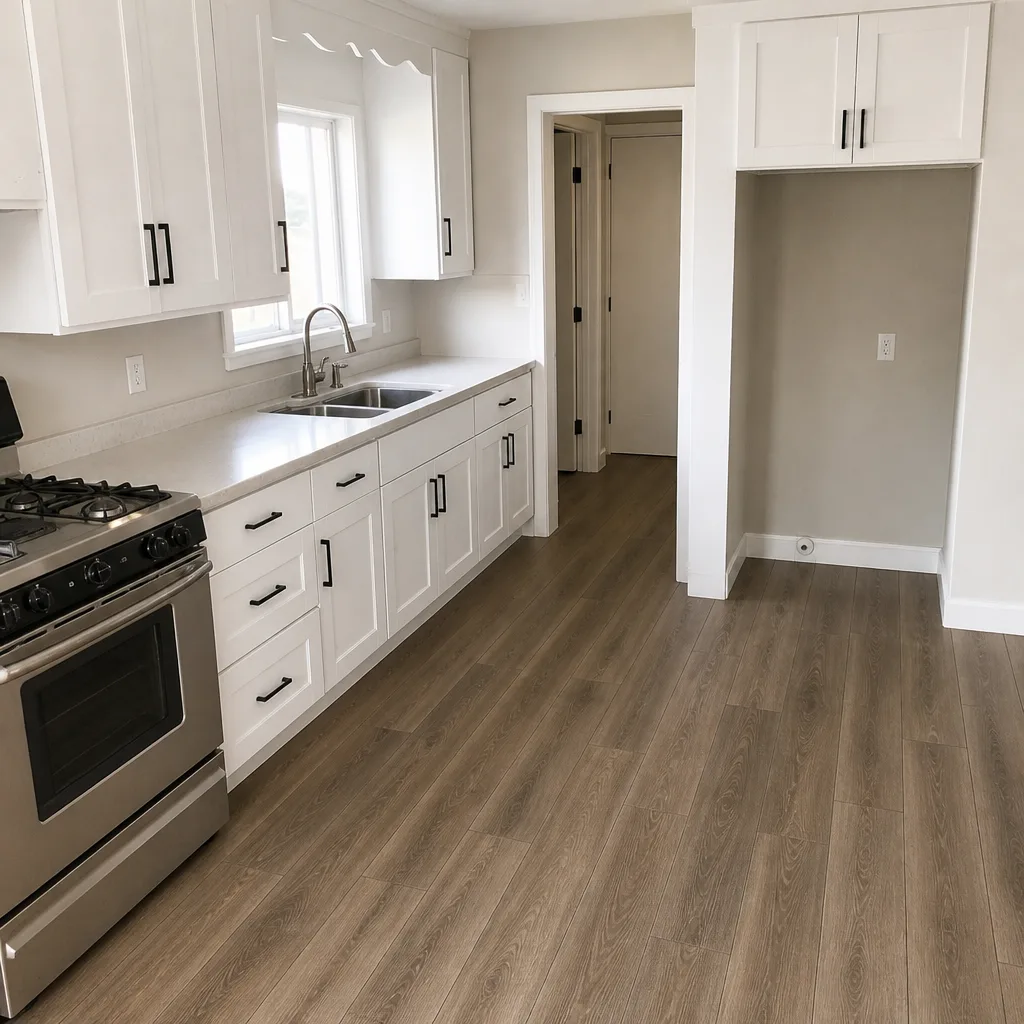
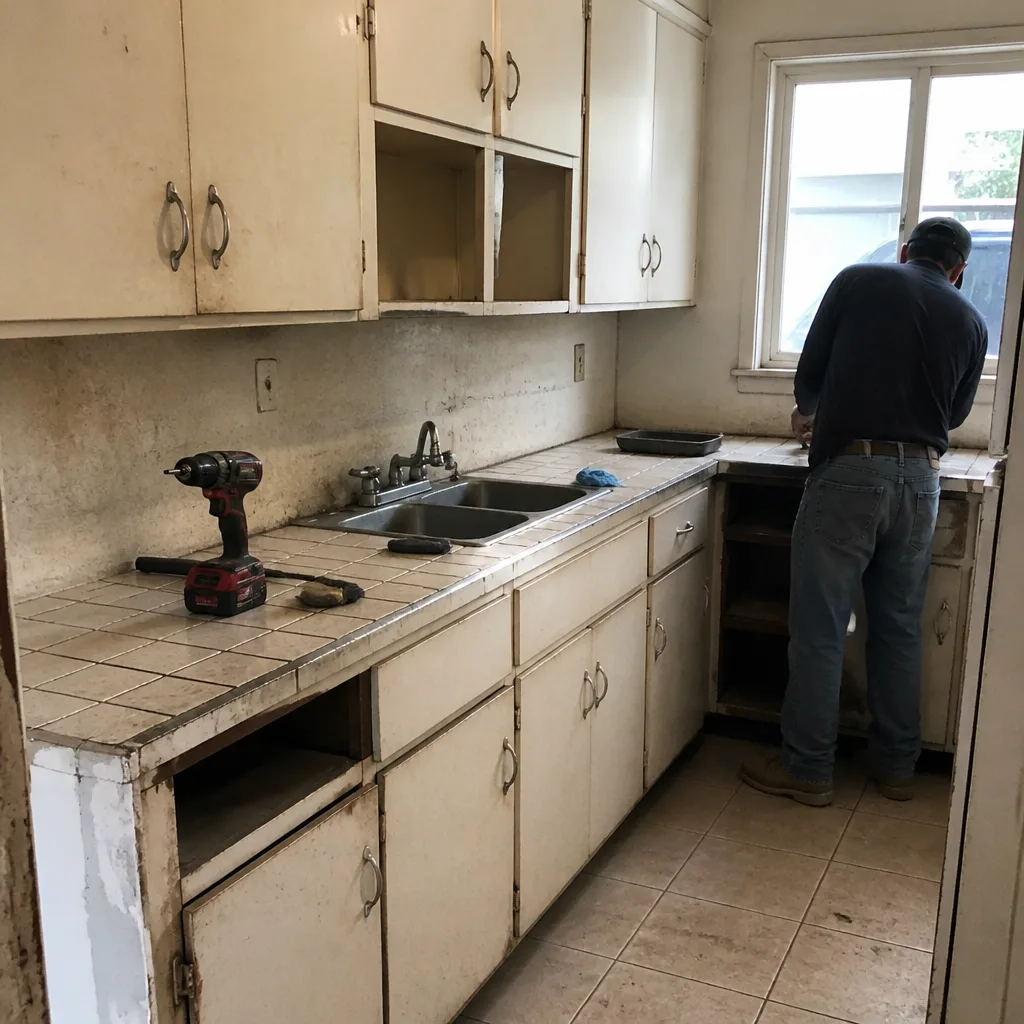
See the difference
 Before
 After
 Before
 After
 Before
 After
When to Call a Professional
Some fence jobs are clear-cut, and some carry risk that isn’t worth taking on alone. Call a professional when your project involves a corner lot or sight triangle, a property line you’re not certain of, an HOA with an architectural review process, a fence over 6 feet, or masonry and retaining wall elements. Those are the projects where a permit was missed or a line was misjudged, and correcting them costs more than doing them right.
We also recommend a professional for any fence that’s structural – anything holding a gate, supporting a masonry column, or retaining soil. Wind events in the SGV expose weak posts fast, and a fence that fails in a Santa Ana wind is a liability, not a privacy screen.
Groundwork Construction Co. of El Monte offers free estimates in El Monte. Call (888) 271-7872 and we’ll walk your property, verify what the city and your HOA will require, and give you a written estimate with upfront pricing. Every project is covered by our 730-Day Done Right Promise – if it’s not done right, we make it right. Financing at 0% for 18 months and $1,000 off projects over $10,000 are available, and a live person answers the phone around the clock.
Frequently Asked Questions
Rear and side yard fences in El Monte are typically limited to 6 feet without a permit, front yard fences are usually limited to 3 to 4 feet within the front setback, and corner lots often have a sight-distance triangle where fences must stay at 3 feet or less. Exact limits depend on your zoning and lot classification, so confirm with the city before you build. Call (888) 271-7872 for a free estimate and we’ll check the specifics for your address.
Yes, in most cases – especially for any fence over 6 feet, fences within the front setback that exceed the height limit, masonry fences, and fences on corner lots within the sight-distance triangle. A standard 6-foot rear-yard fence may not require a permit, but you should verify with the city. We pull permits and pass inspections on every Fence Installation in El Monte project, so you don’t have to navigate the process alone.
Your neighbor can’t stop you from building a fence on your own property, but they can raise a legal challenge if you build over the property line. That’s why a licensed survey is worth the investment – it establishes where the line is and protects you from a dispute. If your fence sits over the line without consent, your neighbor can require you to remove it at your cost. Call (888) 271-7872 and we’ll help you plan a fence that stays safely on your side.
Metal fencing (aluminum or wrought iron) holds up best against the San Gabriel Valley’s dry heat, Santa Ana winds, and termite pressure, though vinyl is a strong low-maintenance alternative. Wood is fine if it’s pressure-treated, inspected for termites, and sealed every two to three years. We recommend material based on your property’s specific wind and sun exposure, not a one-size-fits-all list. Call (888) 271-7872 for a free estimate and we’ll walk you through the trade-offs.
When your HOA is stricter than El Monte’s code, the HOA governs – and when the city requires something the HOA dislikes, both apply. The safest path is to satisfy the stricter of the two, get HOA approval in writing first, and confirm with the city that your plan meets code. Building before HOA approval can lead to a mandatory tear-down even after the city issued a permit. Call (888) 271-7872 and we’ll help you sequence the approvals correctly.
Actual installation takes one to three days for most residential fences, but the full project timeline includes survey (if needed), HOA review, permit issuance, and final inspection – which can add weeks. The building is fast; the approvals take time. Start the HOA and permit steps early to avoid delays. Call (888) 271-7872 for a free estimate and we’ll map out a realistic timeline for your project.
The Bottom Line
Fence installation in El Monte is a construction project with a regulatory core. The material and height are the visible part. The real work happens before any post is set: confirming the property line with a survey, checking your zoning and sight-triangle limits, getting HOA approval before the city permit, and choosing a material that holds up to the San Gabriel Valley’s dry heat, termite pressure, and Santa Ana winds. Handle those four things first and the build itself goes smoothly. Skip them and you risk a remove-and-rebuild order that turns a routine fence into a five-figure mistake. Start with a free estimate, verify the rules for your lot, and build the fence once.
Call (888) 271-7872 to schedule your free estimate. Groundwork Construction Co. of El Monte walks every property, confirms what the city and your HOA will require, and gives you a written, upfront quote. Every project is covered by our 730-Day Done Right Promise, technicians are background-checked and arrive in uniform, and a live person answers the phone around the clock. Financing at 0% for 18 months and $1,000 off projects over $10,000 are available.
Written by the team at Groundwork Construction Co. of El Monte.