Last updated November 17, 2026


Free written scope consultation - allowances, timeline, and change-order rules on paper before a single trade is scheduled
Driveway & Pavers Warning Signs Every Homeowner Should Know
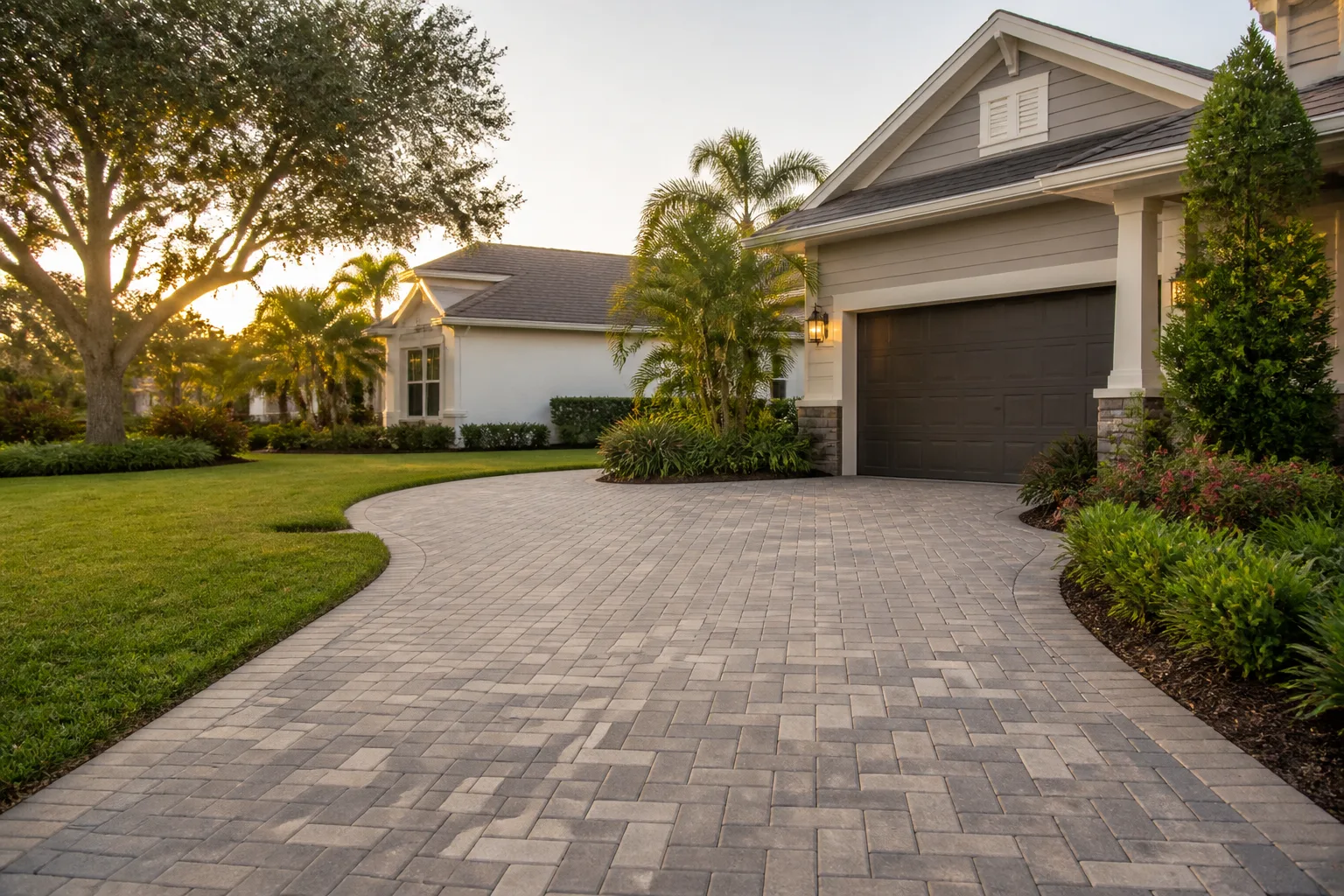
By the time a paver driveway looks obviously bad, the base underneath has usually been failing for 12 to 18 months. The warning signs were there the whole time, just easy to rationalize away as “normal aging.” A paver that rocks slightly underfoot, a joint line that’s gone soft and sandy, water that lingers in a low spot after a rain: none of these look like an emergency, and that’s exactly why they get ignored until a repair turns into a full replacement. In this guide we’ll walk through the signals that actually matter, how to test for each one, which problems can wait for scheduled maintenance, and which demand a call to a contractor now. We wrote it from El Monte, where clay soils and hot, dry summers make some of these failures show up faster than they do in other parts of the country.
Quick Answer
The biggest warning signs on a paver driveway are pavers that rock or feel spongy underfoot, edge pavers shifting outward or separating, water that pools in low spots instead of draining off, and weeds growing through widening joints. Each points to a specific failure: base voids, missing edge restraint, grading problems, or failed joint sand. Rocking and outward-shifting edge pavers are the most urgent, because both mean water is getting under the surface and the problem compounds with every rainfall and every vehicle that drives over it.
Styles & brands we work with
- Kitchen remodeling
- Bathroom remodeling
- Home additions & ADU
- Roofing
- Windows & doors
- Driveway & pavers
- Fence
Table of Contents
- Why Driveway Warning Signs Get Ignored
- The Rocking Paver Test: Finding Base Voids Early
- Edge Pavers Shifting Outward: An Urgent Warning, Not Cosmetic Settling
- Water Pooling Patterns That Reveal a Grading Failure
- Weeds in the Joints: What They Signal Underground
- Why El Monte’s Clay Soil and Heat Accelerate Paver Failures
- When to Call Immediately vs. When a Warning Sign Can Wait
- A Simple Maintenance Routine That Catches Problems Early
Why Driveway Warning Signs Get Ignored
Homeowners aren’t careless. They’re busy, and driveway problems develop slowly enough to feel like background noise. A paver that shifts a quarter inch this year and another quarter inch next year barely registers. The failure mode is gradual by design, which is what makes it easy to miss.
There’s a second reason these signals get dismissed: the language around them. Settling, shifting, hairline cracks, minor pooling; those words sound cosmetic. They’re not. On an interlocking paver driveway, the surface is only doing what the base beneath it allows. When a paver sits unevenly, the base under it has already lost compaction, washed out, or settled. The visible paver is the messenger, not the problem.
We’ve watched this in El Monte specifically. Homes along the flatter stretches of the city, especially in older neighborhoods near the 10 and the 605, sit on expansive clay soils that swell when wet and shrink when dry. That cycle works on a paver base constantly. It also works on the grade, which is why a driveway that drained fine for years can suddenly start holding water after a wet winter. The signs appear faster here than they do on sandy or rocky ground. Catching them early is the difference between re-sanding joints and re-leveling a few pavers versus tearing out and rebuilding the base.
What you’ll learn in this guide: how to run the rocking paver test, how to spot and read edge-paver movement, what pooling patterns say about your grading, why weed growth is a structural signal rather than a landscaping chore, and a clear framework for deciding when to call a contractor and when a fix can wait for your next maintenance window.
The Rocking Paver Test: Finding Base Voids Early
A rocking paver is a paver with nothing solid underneath it. When you step on one and feel it tilt or hear a soft thud, you’ve found a base void, a pocket where the compacted gravel or sand layer has washed out, settled, or never fully compacted in the first place. Left alone, that void grows.
Here’s how to run the test across your whole driveway, not just the spot you noticed:
- Walk the full surface in a grid. Start at the garage apron and work toward the street in parallel lines about two feet apart. Step onto every section, putting weight on the center of each group of pavers.
- Note any paver that moves. A paver that rocks underfoot, however slightly, is sitting over a void or a soft spot. Mark it with chalk.
- Listen for hollow sounds. A solid paver gives a dull, firm thud. A paver over a void sounds hollow or echoing. Tap with your heel rather than your toes.
- Press down on the edges near the marks. If the neighboring pavers also give slightly, the void is larger than one paver and probably extending under the surface.
- Check after a rain. Water in a freshly formed void shows up as a dark, damp patch that dries slower than the surrounding surface.
Why voids matter more than the rocking itself: the movement allows water to enter the base, which softens it further, which creates more movement. Under vehicle weight, a paver over a void can crack or, worse, drop suddenly and throw a vehicle’s alignment or a pedestrian’s footing. The good news is that a limited void can usually be repaired without a full rebuild; the pavers are lifted, the base re-compacted, fresh bedding sand added, and the pavers re-laid. If you catch it while only a few pavers are affected, the repair is narrow. If you wait until the whole field is rocking, the base has to come out, and that’s a much bigger project. If you’re in El Monte and you’ve already noticed a rocker or two, our Driveway & Pavers in El Monte page lays out what a repair versus a rebuild looks like.
Edge Pavers Shifting Outward: An Urgent Warning, Not Cosmetic Settling
When the pavers along the edge of your driveway start to lean, spread, or separate from the field, treat it as a time-sensitive problem. This is not the same as settling. It’s edge restraint failure, and it lets the entire field slowly spread outward.
Every paver driveway relies on an edge restraint: a concrete curb, a plastic edge, or a proper paver border that locks the field in place. When that restraint fails, holds water, or was installed too shallow, the field loses its lateral support and the outer pavers start to migrate. Once the outer pavers have spread, the inner pavers follow in a chain reaction. The more spread, the looser the whole field becomes.
How to tell edge failure from normal settling:
- Gaps open between the field and the border paver. Uniform settlement keeps paver-to-paver joints tight. Spreading opens them.
- Pavers lean outward toward the lawn or street. A lean is a sign the edge is pushing away from the field, not the field pushing down.
- The edge of the driveway feels soft or lifts when pressed. That’s water getting behind the restraint.
- Soil washes out at the driveway edge after rain. Water escaping through a failed edge is visible at the perimeter.
- One or more edge pavers have moved noticeably further than the rest. Asymmetry is the giveaway; even settling is gradual and symmetrical.
Edge failure matters because it’s usually the mechanism behind that first cracked paver, that first tripping hazard, and the sudden realization that a section of the driveway has shifted outward. It also points to a water-control problem at the perimeter of your property. If the edge was constructed without a proper restraint, or with a restraint that’s come loose from the concrete, the fix is to rebuild the edge back into the base and re-set the border; not just to push the pavers back in place. Pressed-in pavers will spread again after a few rainfalls. If your property also has a fence line or gate at the driveway edge, failing curb restraint and failing fence posts often show up together, particularly in El Monte’s clay soils, and our Fence Installation in El Monte page covers how we handle post footings in that same soil. If edge pavers have moved more than a quarter inch in a season, that’s the point to get someone on site.
Water Pooling Patterns That Reveal a Grading Failure
Water tells the truth about grading. A driveway is supposed to slope gently away from the home at a minimum 1 to 2 percent grade, which is roughly an inch of fall for every 4 to 8 feet, and drain toward the street or a designed swale. When it doesn’t, water pools, and pooled water on a paver surface is a symptom with real consequences.
Here’s what different pooling patterns usually mean:
- Water sitting against the garage door threshold. The grade has reversed or flattened. This is the most serious pattern, because water at the threshold can find its way under the door and into the garage or the living space. That becomes a foundation drainage problem, not just a driveway problem.
- A puddle in the center of the driveway that drains slowly. A settled low point, often over a shallow base void or an area of soft subgrade. The puddle kills the paver color over time and accelerates joint sand loss.
- Water running toward the home’s foundation instead of away. The overall slope is wrong. Fixing this means re-grading, not just re-sanding, and it’s the sort of work that needs to be planned properly.
- Water sitting along the edge of the driveway. Either the edge restraint is failing or the swale designed to carry water away has filled or been lost.
- A new puddle that appears only after heavy storms. The base has changed, either through compaction loss or subgrade movement. In El Monte, this shows up in the first big rain after a long dry season, when the clay subsoil has swelled and shifted.
Pooling on a paver driveway matters for three reasons. It puts water into the paver joints (which we’ll cover next), it accelerates color loss and surface wear, and it can drive water into the base and foundation over time. A driveway that drains correctly looks like a driveway for a long time. One that pools slowly destroys itself, and it undermines the drainage protection around the home at the same time. If you’ve noticed water pooling against the house or running toward the foundation, it’s worth getting an estimate now, before the next rainy season makes the fix bigger.
Weeds in the Joints: What They Signal Underground
Weeds growing out of paver joints feel like a landscaping chore. They’re not. They’re a symptom of joint sand failure, and joint sand failure lets water in, which accelerates everything else on this list.
Paver joints are filled with polymeric sand or a similar joint material that locks the pavers together, seals out water, and prevents seeds from reaching the base below. When that sand washes out, thins, or cracks, three things happen. Joints open up. Water enters the base. Weed seeds find purchase in the open joints and grow. A weed poking through the driveway is often a sign that the joint sand around it is already gone.
Watch for these signs of joint sand failure:
- Joints look wider or darker than they used to, particularly in the wheel-path areas where vehicle tires pass.
- Weeds keep coming back in the same spots even after you pull them. The joint is open; the seed has a place to germinate.
- Joint sand washes out of low spots after heavy rain, leaving visible channels of sediment at the curb or in the gutters.
- You can push a screwdriver blade an inch into a joint with ease. Solid polymeric sand resists; failed sand doesn’t.
- Ant activity along the joints. Ants excavate failed joint sand; trails and small mounds are a sign joints are dry and loose.
Weed growth doesn’t just look bad. Once weed roots are established in a joint, they widen it every season. The other consequence: joint sand failure is one of the leading causes of paver settlement. Water running through open joints erodes the bedding sand and, eventually, the base. If you’re seeing weeds across a broad area and not just one or two, that’s a sign the joint sand needs replacing across the field, not just patching. Polymeric re-sanding is usually a same-day service for a driveway, and it buys years back at a modest cost compared with a base rebuild. That’s a maintenance call, not an emergency, but it should go on your calendar this season, not next.
Why El Monte’s Clay Soil and Heat Accelerate Paver Failures
El Monte sits on expansive clay soils, and that single fact changes how paver driveways age here compared to much of the country. Clay swells when wet and shrinks when dry. Over a season that cycle moves the ground underneath your driveway, and the base has to absorb that movement. Older driveways installed without proper base depth, over unwary subgrade, or with inadequate drainage show the impact sooner.
A few patterns we’ve watched become common in El Monte:
- Dry-season shrinkage cracks. After a hot, dry Southern California summer, the soil beneath the pavers can pull away from the base at the edges. That’s when edge pavers start to loosen and joint sand starts to run.
- First-rain pooling. The first significant rain after a long dry stretch hits decades of dry-season soil. If the grade or drainage is marginal, that’s when the puddles appear. In El Monte, this is usually October through December.
- Tree-root intrusion. Mature trees, including ficus and other common shade trees in older El Monte neighborhoods, reach under driveways and lift pavers slowly, presenting as a hump rather than a rock. That hump is tree root, not base failure, and the repair requires different work.
- Sun-driven color fade. El Monte’s summer sun fades paver color unevenly, especially in areas where polymer joint sand has failed and water sits on the surface. Color fade is often the first visual cue homeowners notice, even when the structural issues have quietly started below.
None of this means paver driveways aren’t the right choice in El Monte. It means the base build, drainage, and joint sand have to be done with this soil profile in mind. When they are, a paver driveway handles clay movement well, and it’s easier to repair than concrete because individual pavers lift and reset. If you’re planning a new driveway or a rebuild, that goes into the design. If you’re also considering a bigger structural project on the property, we work on additions and second units in the same soil conditions, and our Home Additions & ADU in El Monte page explains how we handle foundations for that work.
When to Call Immediately vs. When a Warning Sign Can Wait
Not every warning sign is urgent. Some are a maintenance call; a few are a call-now problem. Here’s our practical split, built from what we see on El Monte properties.
Call a contractor now if you see:
- Water pooling against the garage door threshold or running toward the home’s foundation. This is a water-diversion problem that gets worse every rain.
- Any paver leaning out more than a quarter inch or edge pavers visibly separating from the field. Edge failure compounds quickly.
- A single paver that has dropped noticeably and become a tripping hazard. Remove the trip hazard (mark it or block it) and call for inspection.
- Visible movement in a whole section of driveway, not just one or two pavers. That points to a base-level failure.
- Settlement that appeared suddenly, over weeks rather than seasons. Sudden movement can indicate a water leak beneath the driveway or a subgrade problem.
- Any warning sign that’s worsened through one rainy season. The compounding is already in motion.
These can usually wait for your next scheduled maintenance window:
- Joint sand loss without visible paver movement. Plan to have it re-sanded in the next scheduled maintenance visit.
- Weeds in the joints without paver movement. Pull them and plan for a re-sand. Persistent weeds across a wide area mean re-sanding the whole field.
- Faded color with the pavers stable and the joints intact. Cosmetic issue, not structural; can be addressed on a schedule.
- Minor weathering of the paver surface with no voids or movement detected.
- Isolated moss or mildew growth. Cosmetic cleaning, not a structural question.
The line between “wait” and “call now” comes down to movement and water. Anything moving or directing water toward the home is a call-now problem. Anything that’s just surface wear or a maintenance chore is a calendar item. Our technicians have up to 12 years of experience reading that line on El Monte driveways; when it’s borderline, an inspection is the cheap answer.
A Simple Maintenance Routine That Catches Problems Early
The homeowners who keep a paver driveway looking new for decades aren’t lucky. They run a short seasonal routine that catches failures while the repairs are small.
- Walk the driveway in a grid once a month. Feel for rocking pavers and listen for hollow sounds. Mark anything you find.
- Check the edges after any significant rain. Look for soil wash-out at the driveway perimeter or any paver leaning outward.
- Look at the joints every quarter. Wide, dark, or sediment-lined joints mean it’s time for re-sanding. Address weeds while they’re small.
- Watch the puddles. Note where water sits after storms and whether the pattern is growing. A new puddle after a storm that was dry last year is worth noting.
- Look at the joint at the garage apron once a year. Water finding its way toward the garage door threshold is a drainage issue you want to catch before it becomes a foundation problem.
- Schedule a professional inspection every couple of years. A trained eye spots what homeowners miss: hairline joint failure, subgrade settlement that hasn’t yet shown up as motion, and edges that are just starting to fail.
Two proactive moves pay for themselves. First, re-sand the joints proactively rather than waiting for weeds; polymeric sand gives years of coverage and prevents the water intrusion that drives every other failure on this list. Second, check the driveway grade relative to the house once a year; the cost of a minor re-grade now is tiny compared with drainage repairs later. If your driveway is shared with a fence line or gate pillar at the perimeter, those checkpoints matter too, since failing curb restraint and failing fence posts often share the same water source, and the fence installation team uses the same base-preparation standards.
Common Mistakes to Avoid
- Pushing a shifted edge paver back into place by foot. It looks fixed until the next rain. The edge restraint still isn’t holding, and the field will spread again within weeks. It needs to be re-set into a proper base.
- Adding sand on top of failed joint sand. Fresh sand laid over failing joints doesn’t seal. Pull the loose sand first or re-sand the whole field; a quarter-inch top-up just hides the failure.
- Ignoring a single small puddle. On an El Monte driveway, a small puddle that appears after the first rain of the season is a signal, not a coincidence. Track it through the winter, and if it’s new this season, get eyes on it.
- Assuming color fade is cosmetic only. Faded pavers along the low spots of a driveway where water pools are telling you where the water problem is. Check the joints there before you write it off.
- Waiting for a trip hazard to become a fall. A paver that has dropped noticeably is a liability, especially for older homeowners and kids. Block or mark it and call for repair.
- Top-coating pooling areas with concrete or mortar patches. Mortar patches fail on clay-soil movement, and once they crack the repair gets bigger. The base is the issue, not the surface.
- Skipping professional inspection because “it looks fine.” The visual surface lags the base by a year or more. The failures that get expensive are the ones that haven’t cracked the surface yet.
See the difference
 Before
 After
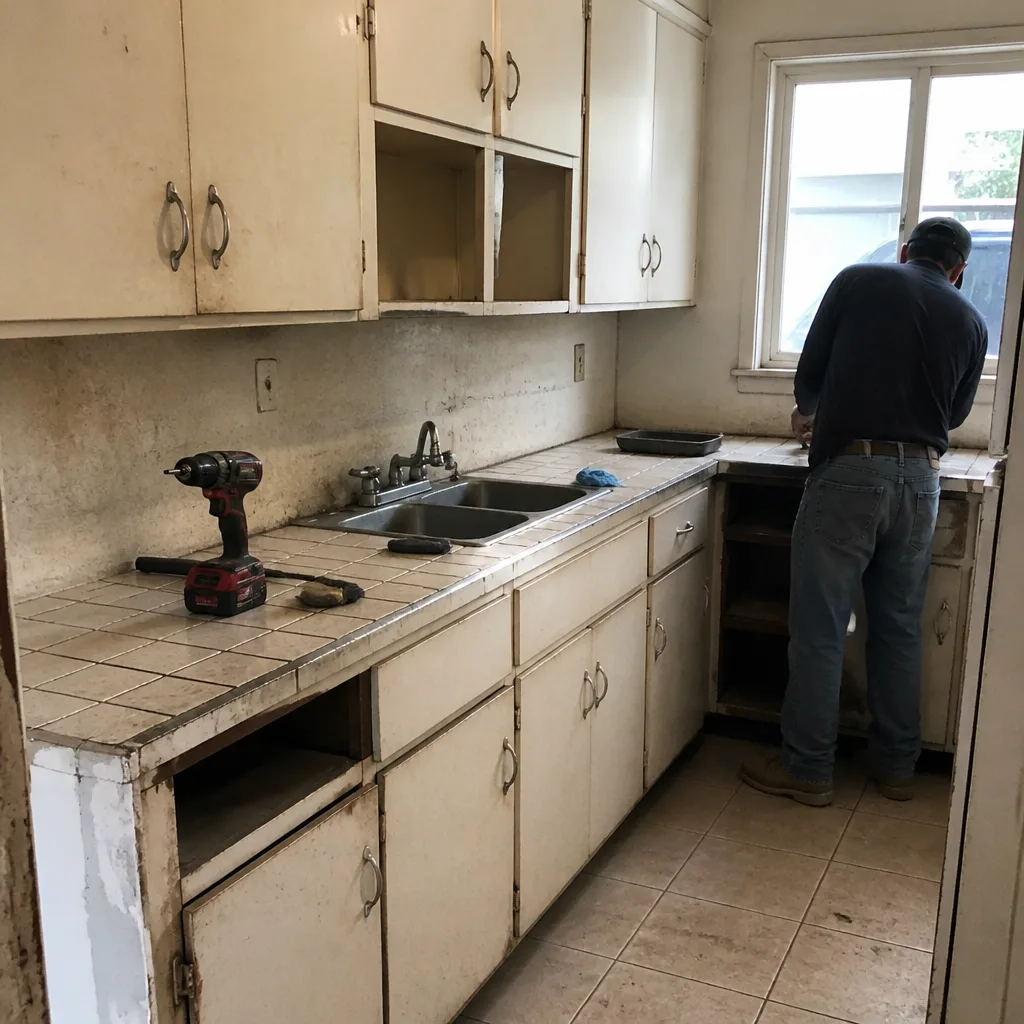 Before
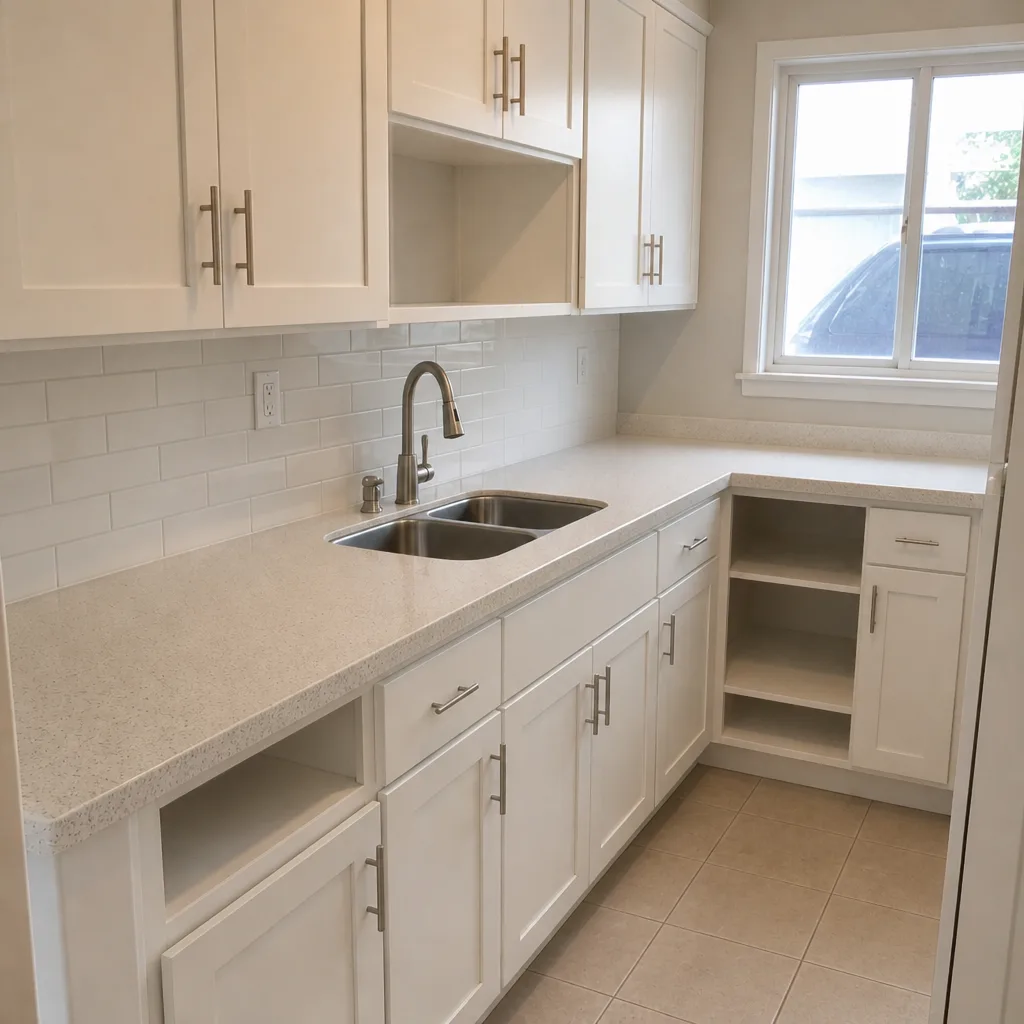 After
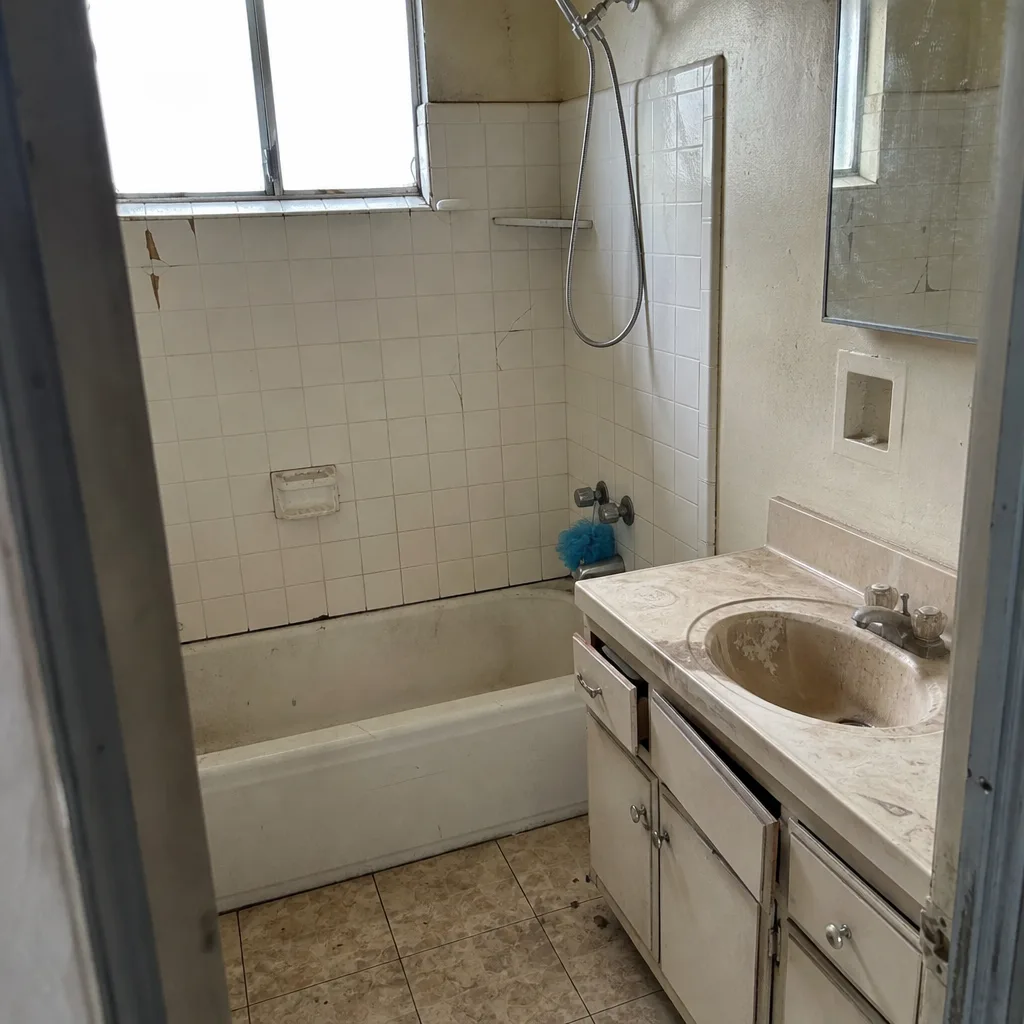 Before
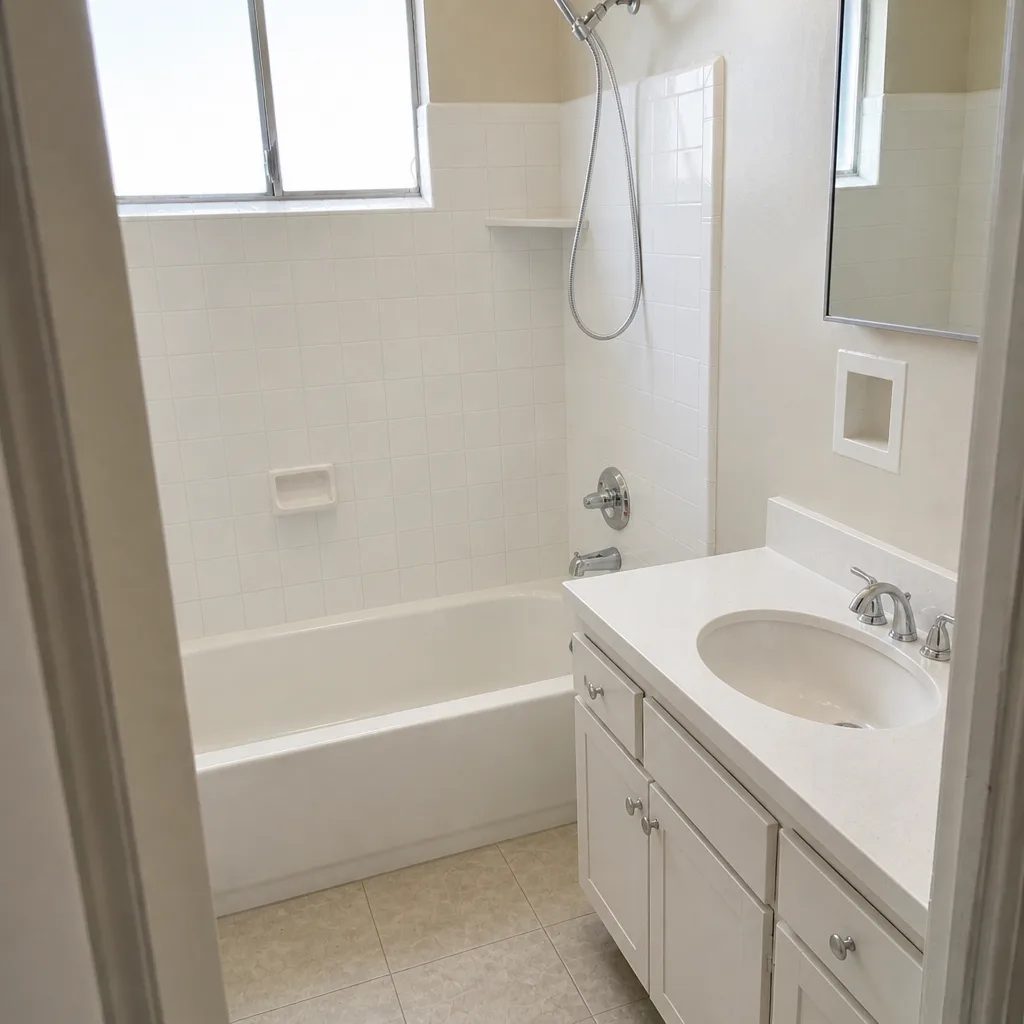 After
When to Call a Professional
Call a professional if you find a rocking paver, an edge paver that leans, water pooling anywhere on the driveway or against the home, or joint sand that’s failed across a wide area. Call now if any of those signs got worse after a rain, or if a paver has moved suddenly within a few weeks. The line between a small fix and a full rebuild is measured in months, not years, which is why it’s worth an inspection the moment you notice something. You’re also calling for damage you can’t see: base voids, subgrade settlement, and drainage failures only show up on a proper inspection, and they’re the ones that get expensive. Groundwork Construction Co. of El Monte offers free estimates in El Monte. Call (888) 271-7872 to schedule yours, and if the driveway is one piece of a larger project, our full-scope work is detailed on the Groundwork Construction Co. of El Monte home page.
Frequently Asked Questions
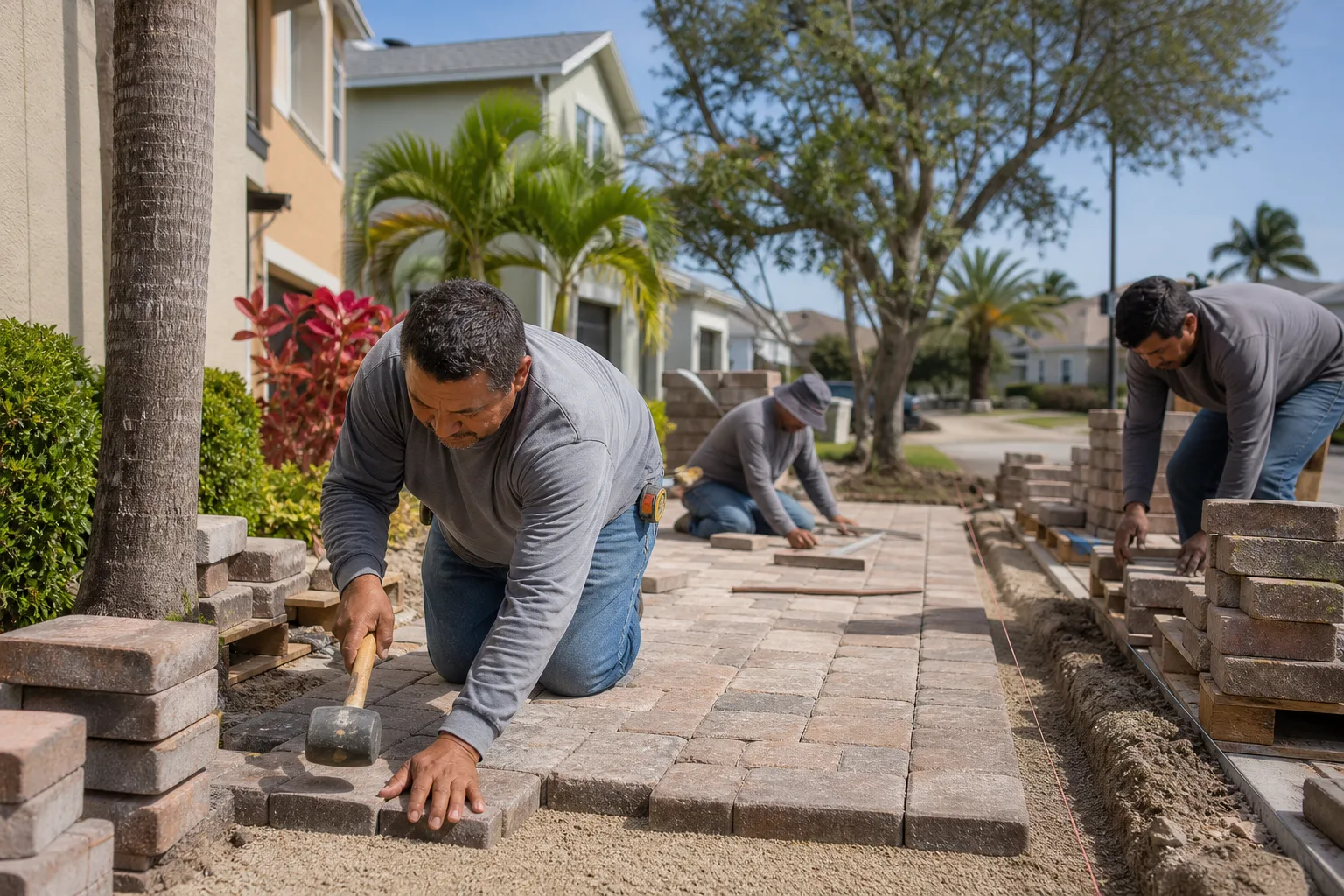
A rocking paver, a hollow sound when you step on it, or a low spot that appears suddenly all point to a base problem. Run the rocking paver test across the whole driveway: walk the surface in a grid, listen for hollow thuds, and mark any paver that moves. If multiple pavers in a section rock or the neighboring pavers also give when pressed, the void has spread and the base needs to be re-compacted. Call (888) 271-7872 for a free estimate; the inspection is what separates a small repair from a full rebuild.
Yes. Edge paver movement means the edge restraint has failed, and it usually gets worse with every rain and every drive. When the restraint comes loose, the field loses lateral support and starts to spread outward, which opens joints across the whole driveway. The fix isn’t to push the pavers back; the edge has to be rebuilt into a proper base and restraint. If edge pavers have moved more than a quarter inch in a season, get an estimate now rather than waiting for the surface damage to compound.
Repair and replacement costs vary by scope, base condition, and driveway size, and we don’t quote a number before we’ve seen the property. A repair (re-leveling a few pavers, re-sanding joints, re-setting an edge) is a fraction of a full rebuild, and the difference in cost is why early detection matters so much. We provide no-hassle upfront pricing in writing, with 0% financing for 18 months and $1,000 off projects over $10,000 available. Call (888) 271-7872 to schedule a free estimate and design consult.
Not the weeds themselves, but what they signal. Weeds in the joints mean the polymeric joint sand has failed, which lets water into the base and drives settlement. Once the joint sand fails, the driveway starts down the path of rocking pavers, edge movement, and pooling. Pull the weeds, and plan a full re-sand of the affected area. If weeds are widespread across the driveway, schedule the re-sand for the whole field; a spot fix won’t hold.
El Monte’s expansive clay soils swell and shrink across wet and dry seasons, and that cycle moves the subgrade under a paver driveway. A driveway that drained correctly for years can develop a new low spot after a wet winter or after a dry spell opens up settlement. A new puddle after the first major rain of the season is a grading or base signal, not a one-off. If the pooling runs toward the house or the garage door threshold, treat it as urgent. Call (888) 271-7872 for a free estimate, and we’ll tell you whether it’s a re-grade or a base rebuild.
Settlement is even, slow, and often expected as a driveway ages; a small amount of settling across the whole field is normal. Base failure is uneven, localized, and progressive; it shows up as pavers that rock, hollow spots, water pooling in new places, and edges that spread. Settlement catches up with maintenance. Base failure requires repair. If the movement is isolated to specific pavers or sections or has appeared within weeks, that’s base failure. A trained eye can tell the difference in a single inspection.
The Bottom Line
Warning signs on a paver driveway are always structural, even when they look cosmetic. Rocking pavers mean base voids; outward-shifting edge pavers mean edge restraint failure; pooling water means grading failure; weeds and open joints mean joint sand failure. Each one compounds over time, and each one starts cheap to fix and gets expensive if it waits. On El Monte’s clay soils and hot, dry summers, these cycles run faster, which is why a monthly walk and a biennial inspection are worth the few minutes they take. If you see any of these signs, or if the surface has moved in a way that doesn’t match your old memory of it, get the free estimate before the next rainy season makes the fix bigger. The 730-Day Done Right Promise stands behind every repair and rebuild we do.
Schedule Your Free Estimate
Call Groundwork Construction Co. of El Monte at (888) 271-7872 for a free estimate on your driveway or paver project. Calls are answered by a live person, 24/7, no voicemail and no delays, and every technician who comes to your property is background-checked and arrives in uniform. You’ll get a written, no-hassle upfront quote; the number you see is the number you pay. We’re proud to offer 0% financing for 18 months and $1,000 off projects over $10,000, and every job is backed by the 730-Day Done Right Promise: if it’s not done right, we make it right.
Written by the team at Groundwork Construction Co. of El Monte.