Last updated November 17, 2026




Free written scope consultation - allowances, timeline, and change-order rules on paper before a single trade is scheduled
Bathroom Remodeling Warning Signs Every Homeowner Should Know
A beautiful tile job can conceal a waterproofing failure that won’t show up for 18 months. By then, the contractor’s phone may be disconnected and the mold is already in your wall cavity. In our experience reviewing failed remodels around El Monte, the most expensive failures were invisible at the final walkthrough. The tile looked straight. The grout looked white. The customer signed off happy, and the real damage started the following spring. This guide teaches you to read a job site like an inspector, not a customer: what to watch during construction, what to check in the first 48 to 72 hours after completion, which contractor behaviors predict trouble, and exactly how to document and escalate a problem without blowing up a job you still need finished.
Quick Answer
The biggest bathroom remodeling warning signs are: no written scope or line-item bid, cash-only payment schedules that front-load the contractor’s money, permits skipped or “pulled later,” tile set without a visible waterproofing layer, and caulk used where grout or a proper joint belongs. Any one of these is a yellow flag. Two together means pause the project and get a second read before the next payment.
Styles & brands we work with
- Kitchen remodeling
- Bathroom remodeling
- Home additions & ADU
- Roofing
- Windows & doors
- Driveway & pavers
- Fence
Table of Contents
- Warning Signs You Can Spot During Active Construction
- The 48-72 Hour Post-Completion Inspection
- Contractor Behavior Red Flags That Predict Workmanship Problems
- The Questions That Separate a Pro From a Guesser
- What to Do When You Spot a Warning Sign Mid-Project
- El Monte-Specific Issues: Climate, Code, and Housing Stock
- Permits and Inspections: What a Legitimate Pull Looks Like
Warning Signs You Can Spot During Active Construction
You don’t need to know how to set tile to see when tile is being set wrong. Most on-site red flags are visible to a homeowner who knows where to look. Walk the job at the end of each workday and take a photo of everything. The pattern of small visual details in week one almost always predicts how the finished bathroom performs in year two.
Grout and caulk placement
Grout belongs between tile in the field. Caulk belongs at every change of plane: where the wall meets the floor, where the shower wall meets the tub deck, and inside every vertical corner. A crew that grouts a change of plane is setting up a crack within months. In our experience, this is the single most common shortcut we correct on bathrooms in El Monte, where tile over old framing rarely stays perfectly still through a warm dry summer. Corrections to grout in a change of plane are always a sign someone cut the corner on purpose.
Waterproofing visibility
Before any tile goes on a shower wall, you should see a bonded waterproofing membrane, a cement backer board with a taped and coated seam system, or a sheet membrane. If you walk in and the tile is already being laid over bare drywall, stop the work that day. Skim-coated drywall in a wet area is the classic concealed failure, and its damage shows up as a soft spot behind the adjoining bedroom wall, not the shower.
Tile layout telegraphs the rest of the work
Look at the cuts. A professional centers the tile on the visible wall, keeps cut pieces larger than a third of a full tile at the edges, and aligns grout joints between the floor and wall where possible. A crew that leaves a 1-inch sliver of tile at a corner, or staggers grout joints visibly across a shower wall, is rushing. Rushed tile setting usually means the slope of the shower pan was also rushed. And a shower pan without the correct slope means standing water and eventual mold in the subfloor.
- Grout in a corner or change of plane instead of caulk: crack coming.
- Tile mortar smeared over the drain flange: slow leak coming.
- No visible waterproofing layer under the tile: tear-out in your future.
- Tile laid tight against the tub deck without a flexible joint: cracked tile in 6 months.
- Uneven shadow lines under a row of tile at eye level: substrate wasn’t leveled.
The 48-72 Hour Post-Completion Inspection
Don’t sign the completion release on the day the crew packs up. Wait 48 to 72 hours, then walk the bathroom with a flashlight and a roll of paper towels. Water and movement need time to show themselves, and the first three days are when a bad shower pan or a loose fixture connection announces itself.
Step-by-step walkthrough
- Run the shower for 10 minutes. Watch every seam. Then wait 30 minutes and check the wall on the opposite side and the ceiling below, if applicable. Any dampness is a failed pan or a bad drain seal.
- Press a dry paper towel along the base of every fixture. Around the base of the toilet, under the sink trap, behind the supply line shutoffs. Any moisture means a loose fitting.
- Press on every caulk joint. It should feel firm and continuous. Gaps, bubbles, or a joint that peels away on thumb pressure means the caulk was applied over a wet surface and will fail.
- Test the toilet for rocking. A toilet that rocks means the flange was set on an uneven surface, or the wax ring was compressed wrong. It will leak into the subfloor within weeks.
- Check grout for hollow sounds. Tap lightly with the plastic handle of a screwdriver. A hollow thud under a tile means it’s partially debonded and will pop loose.
- Run the exhaust fan for 15 minutes and feel the airflow at the grille. Weak airflow means a duct was crushed or terminated in the attic, which is a mold problem before summer.
- Look at the light switch and outlet plates. They should be flush and level. Crooked plates usually mean the drywall cut was rushed, and that same crew likely rushed the tile too.
Contractor Behavior Red Flags That Predict Workmanship Problems
Bad tile work rarely comes from a crew that was otherwise organized and accountable. It comes from a crew that never planned to be accountable in the first place. The behavioral signals appear weeks before the first cut is made, and they’re easier to see than anything on a job site.
No written scope
A written scope is more than a line that says “bathroom remodel.” It’s a list of what’s included and a list of what isn’t. Which fixtures are included, which are excluded. Whether the vanity is being replaced or refinished. How the floor is prepped. What happens if a wall turns out to be water-damaged. If your bid is a single dollar amount on a single piece of paper, the argument about what’s included starts the moment work begins.
Cash-only schedules and front-loaded deposits
Asking for a large cash deposit up front, or a schedule with more than 30% due before materials arrive, is the signature of a contractor who needs your money to fund the last job. Legitimate payment schedules are tied to milestones: demo complete, rough-in inspected, tile complete, fixtures set, final walkthrough. Cash-only is a separate warning. It means no paper trail, no card protection, and no way to chase a refund.
Skipping permits
In most California jurisdictions, a bathroom remodel that moves plumbing, replaces a shower valve, moves an electrical outlet, or adds a new circuit requires a permit. A contractor who says “we don’t need a permit for that” is handing you the risk. In El Monte, unpermitted bathroom work can surface at resale as a disclosure problem, and it can void an insurance claim if a leak leads to a mold remediation. If the contractor isn’t pulling permits, they aren’t carrying the liability.
No address on the bid
A bid without a physical business address, a license number, and a phone answered by a person is not a bid. It’s a text message with a number. Ask for the license number in writing before signing anything. Verify it with your state licensing board. Any hesitation from the contractor is the answer.
- Verbal scope only, or a single lump-sum figure.
- Deposit above 30% before any materials are ordered.
- “Permits aren’t needed for a bathroom” without explanation.
- No license number on the written bid.
- Change orders handled verbally, then billed at the end.
- No warranty on workmanship beyond 30 days, or warranty offered only “as long as you own the home.”
The Questions That Separate a Pro From a Guesser
You don’t need to know how to waterproof a shower to tell whether a contractor does. You need three specific questions and the ability to listen for a specific answer. A confident, experienced contractor answers with detail. A guesser answers with sales talk, or pivots to price.
Question 1: “What waterproofing system are you using in the shower, and why did you pick it?”
A pro names a specific system (a liquid-applied membrane, a bonded sheet membrane, or a cement board with a seam-sealing system) and explains why that system fits this job. A guesser says “we do it right” or “we use the best materials.” Neither answers the question.
Question 2: “If I open the wall and find rot around the shower valve, what happens to the price and the schedule?”
A pro answers with a change-order process, in writing, before demo begins. They tell you roughly what hidden damage typically costs and how many days it adds. A guesser says “don’t worry, that almost never happens,” which is exactly what someone without a process says.
Question 3: “What’s covered under your workmanship warranty, and for how long?”
A pro gives you a specific number of years and, ideally, documentation. At Groundwork Construction Co. of El Monte, every bathroom falls under our 730-Day Done Right Promise: if it’s not done right, we make it right, and that clause lives in the contract, not in a conversation. A guesser says “we stand behind our work.” That sentence covers nothing.
Additional questions worth asking
- “Who is doing the tile work: your crew, or a subcontractor you haven’t met?”
- “Can I see a recently completed bathroom within 30 minutes of here?”
- “How are you handling the permit pull and the inspection?”
- “What brands are you specifying for the faucet, toilet, and vanity, and why?”
- “What’s the exact daily schedule, and who is my point of contact if something goes wrong?”
For our own bathroom clients, we spec brands like Delta for the shower valve, Toto for the toilet, and Kohler for the vanity sink, because those are the three components that show up in every leak call we respond to. A contractor who can name the brand and the reason behind the choice is a contractor who knows the work.
What to Do When You Spot a Warning Sign Mid-Project
The instinct when you catch something wrong is to blow up the job. Don’t. Your goal is a corrected bathroom, not a canceled contract and a lawsuit. The correct response is documented, in writing, and respectful. Contractors correct problems in writing. They stonewall problems delivered by phone call.
The mid-project escalation process
- Photograph and date. Every concern gets a photo with a timestamp and a short written description. Take photos of the whole bathroom at the same time, so the corrector can’t claim you’re misstating context.
- Write, don’t call. Send a short email or text: what you saw, where, when, and what you want done. Keep it factual. “I noticed grout in the corner at the tub deck, which should be a caulk joint per the plan. Can you have the tile setter correct that before the next payment?”
- Pause the next payment, not the whole project. Any work that hasn’t begun stays held until the correction is made. That’s a reasonable position and one any contractor who has done this before will accept.
- Ask for a written correction plan. What is being fixed, how, and by when. If the contractor won’t put that in writing, you have your answer about the rest of the project.
- Request a third-party inspection. If it’s a concealed waterproofing issue, an independent inspection is worth the $200-$400 cost. A written inspector’s report ends every argument about whether the problem exists.
- Document everything in one thread. No calls, no hallway conversations. Every correction request, every response, every date, in one email chain.
The mistake we see most often on El Monte bathroom jobs is a homeowner who quietly accepts a bad correction, then finds the same crew making a second shortcut a week later. Contractors treat quiet homeowners as easy homeowners. Polite documentation changes the tone of the job in a single email.
El Monte-Specific Issues: Climate, Code, and Housing Stock
El Monte has a specific set of conditions that make bathroom work risky in ways that don’t show up in a generic remodeling guide. The housing stock matters, the climate matters, and the local permitting process matters. A contractor from outside the area who doesn’t know these will still bill you like one who does.
Older housing stock
Much of El Monte’s single-family housing was built from the 1940s through the 1970s, and a lot of those bathrooms still hide original plumbing: galvanized supply lines, cast iron drain stacks, and in some cases old lead-based tile adhesive. When a crew demolishes a 1955 tile bathroom in El Monte without addressing the supply lines behind the wall, they’re setting you up to open the wall again in five years. A good bid includes a line for “replace supply lines behind the shower valve if original,” even if it’s a contingency.
Dry summers and warm attic heat
San Gabriel Valley summers hammer bathroom construction in a specific way: tile thinset cures fast, so it grabs before the setter can adjust. A rushed cure leads to lippage, the slight edge mismatch you can feel with your hand. And attic exhaust duct runs, especially in homes around South El Monte and Mountain View, are long enough that a crushed duct is common. That duct becomes a mold issue in the first wet winter.
Water hardness
San Gabriel Valley water is hard. If the bathroom remodel doesn’t include a plan for hard-water management, the new fixtures start spotting within a month and the new caulk discolors within a year. We routinely spec a Delta or Kohler finish that tolerates hard water better than builders’-grade chrome, and we’ll suggest water-softener integration if the homeowner wants it. That’s the kind of detail that doesn’t show up in most El Monte bids, and it’s exactly why we ask.
Second-floor and wet-wall adjacency
A lot of El Monte homes have a bathroom on the second floor or backed against a hallway wall. A failed shower pan on the second floor leaks into the ceiling of the room below. On a wet-wall bathroom, it leaks into the hallway drywall. Both cases make the fix twice as expensive than if the leak had been caught on the first day. This is the strongest argument for the 48-72 hour inspection after completion, and the strongest reason to keep the bathroom fan running during every shower.
Permits and Inspections: What a Legitimate Pull Looks Like
A permit is a documentation trail that you open, not the contractor. The permit is filed under the property address and follows the property, not the contractor’s business. That matters, because it means the permit is still on record whether the contractor is still in business or not.
A legitimate pull looks like this: the contractor requests your signature on the application, files it with the El Monte building department, provides you the permit number on request, schedules the rough-in inspection before the walls close, and schedules the final inspection before you make the last payment. If any of those four steps is missing, you’re being sold a shortcut.
While you’re inside that conversation, this is where our team answers the phone for El Monte homeowners at any hour, including the weekend before the rough-in inspection when a homeowner wants to know what a permit folder should contain. Live person, 24/7. No voicemail. If you’d like a reference for how we handle a permit pull and how we structure a bathroom scope, the Groundwork Construction Co. of El Monte home page has the full picture, and if your scope grows into a bigger project, the Home Additions & ADU in El Monte page explains how we sequence a permit-heavy build.
- Permit number provided on request, in writing.
- Rough-in inspection scheduled by the contractor, not by you.
- Final inspection before final payment, not after.
- Inspection card left on site with the inspector’s signature.
- All changes to the scope reflected in an amended permit if the layout changed.
Common Mistakes to Avoid
- Signing off on the day of completion. Wait 72 hours. Water and movement need time to show themselves, and the release you sign on the last day sticks whether the shower pan holds or not.
- Accepting a lump-sum bid. A single number on a single page is a promise to argue later. Ask for a line-item scope in writing, with what’s included, what’s not, and a change-order process.
- Paying more than 30% up front. Front-loaded deposits pull the contractor’s cash forward and your leverage backward. Tie payments to milestones.
- Letting the contractor “handle” the permit. The permit follows your property, not theirs. Get the number and confirm it’s on record.
- Skipping the exhaust fan verification. In El Monte’s warm, hard-water climate, the fan is the difference between a mold-free bathroom and one that becomes a repair project.
- Ignoring the tile edge cuts. A 1-inch sliver of tile at a visible corner means the crew rushed the layout. The shower pan below it was probably rushed the same day.
- Starting demolition before hidden-damage contingencies are on paper. Old El Monte homes almost always surprise you inside the wall. The bid should say what happens when they do.
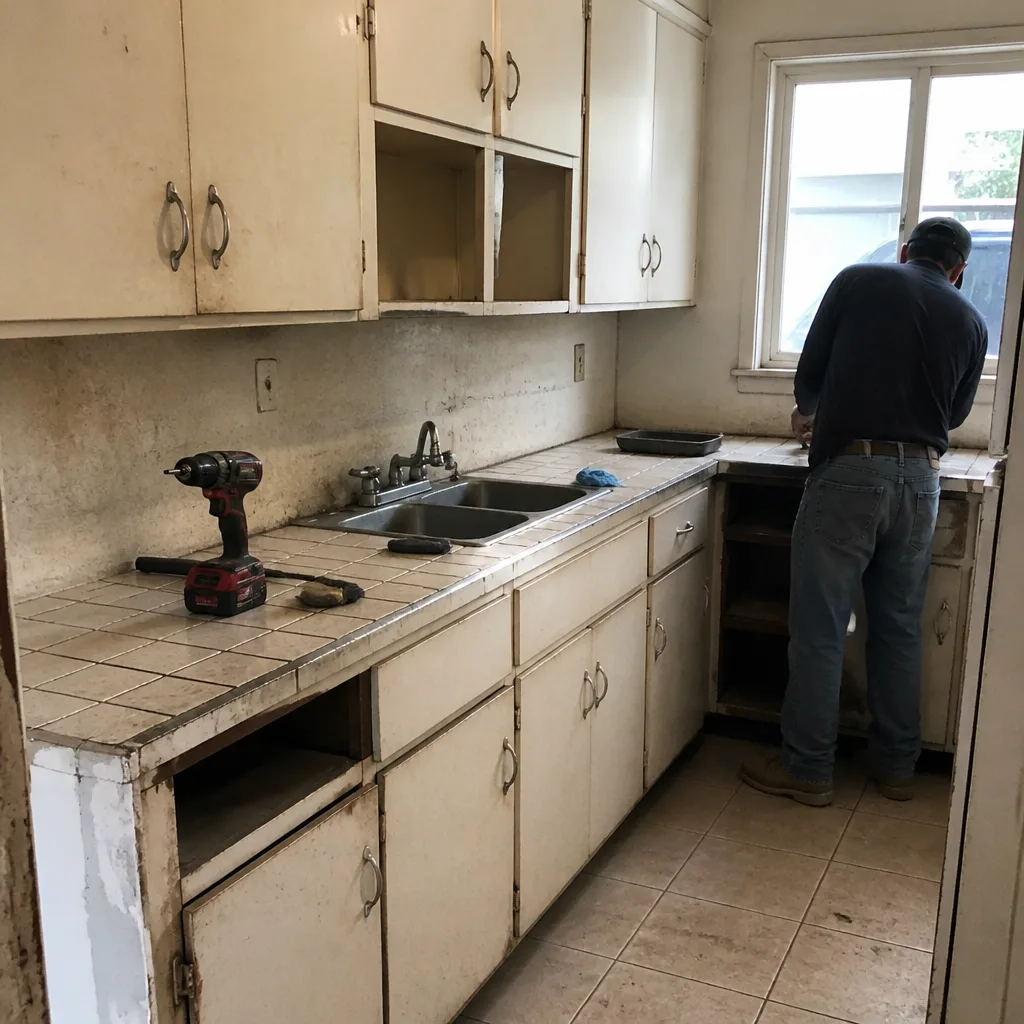
See the difference
 Before
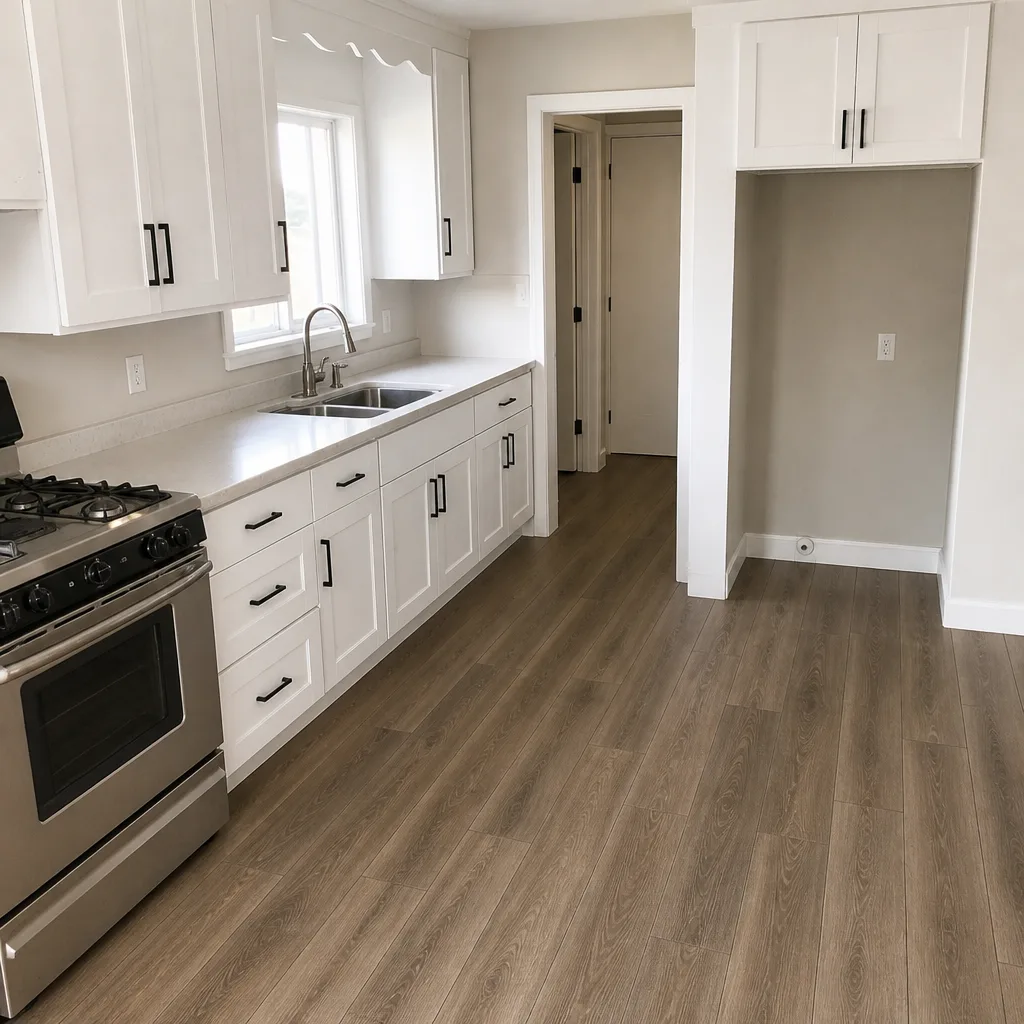 After
 Before
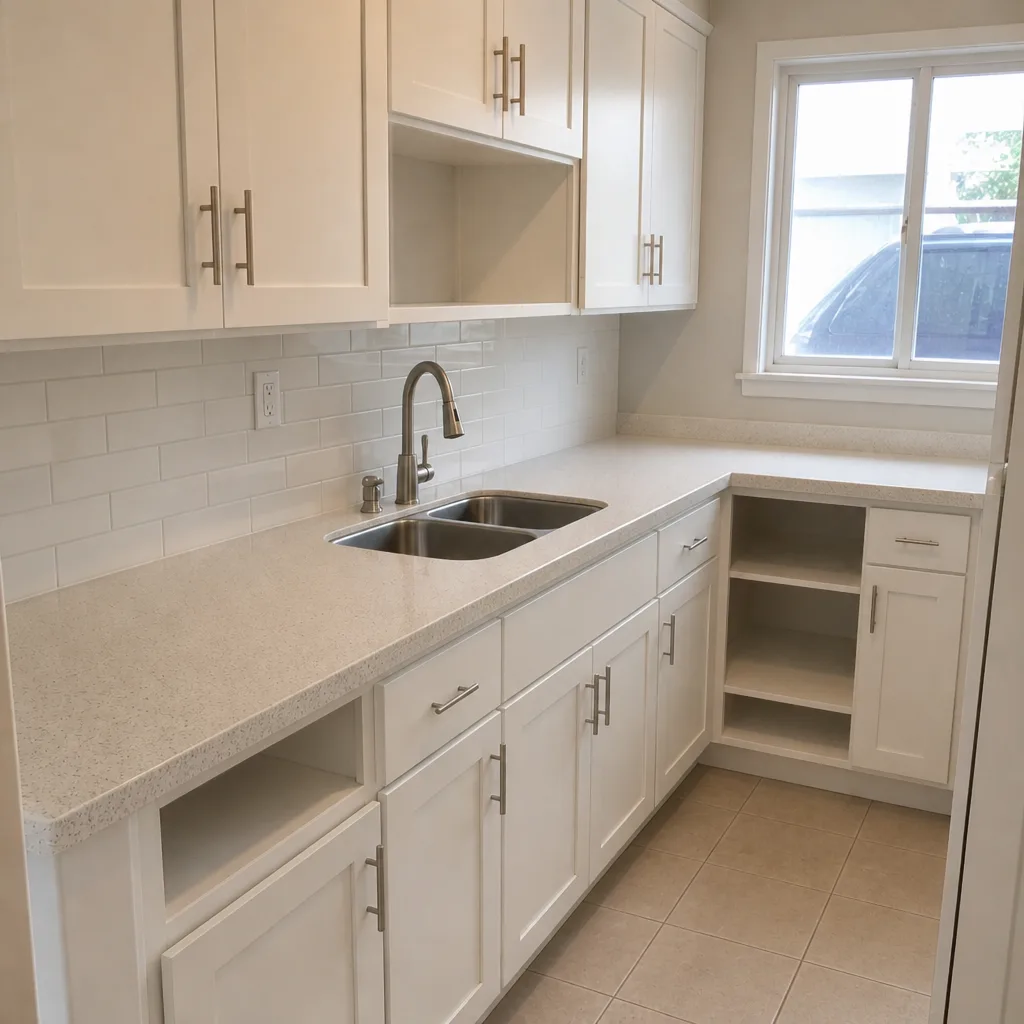 After
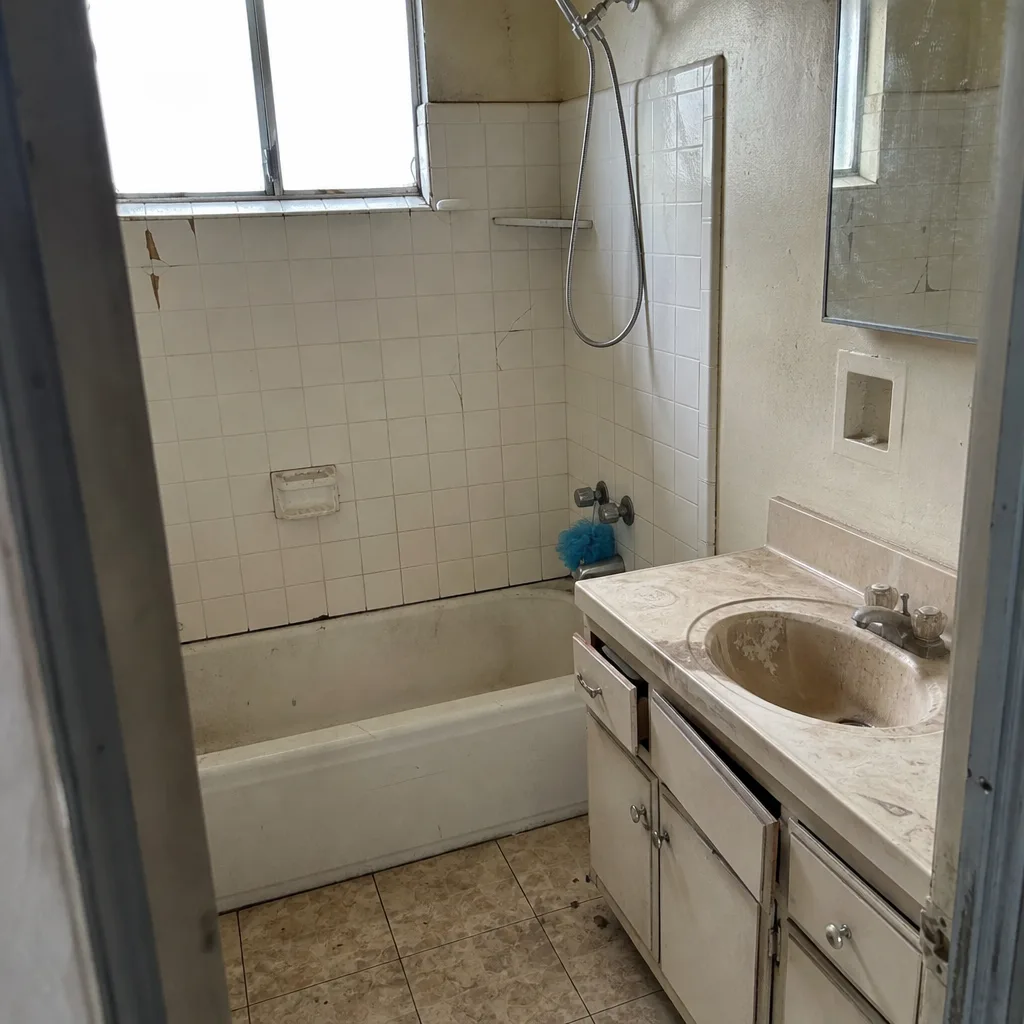 Before
 After
When to Call a Professional
Call a professional if you see any of the following: bare drywall behind tile in a wet area, grout in a change of plane, a shower pan that pools water when you run the fixture, a contractor who won’t provide a license number, a bathroom that was remodeled without a permit, or a wet spot on the ceiling under a second-floor bathroom. Not every one of these is an emergency, but each of them is a repair that costs more every week it waits. Our technicians have up to 12 years of experience diagnosing failed remodels, and we’ll tell you honestly whether you’re looking at a correction or a redo. Groundwork Construction Co. of El Monte offers free estimates in El Monte. Call (888) 271-7872 to schedule yours, and if the bathroom scope becomes part of a larger renovation, we can price a Driveway & Pavers in El Monte project or a Fence Installation in El Monte in the same visit.
Frequently Asked Questions
Correcting a failed shower pan or wall waterproofing in El Monte typically runs $4,000-$12,000, depending on whether the tile has to be fully removed and whether the subfloor was damaged. The cost jumps sharply if the leak reached the floor below. Call (888) 271-7872 for an exact quote. Estimates are free.
Yes, most El Monte homeowners stay in the home during a bathroom remodel, but it does make warning signs easier to miss. You’re less likely to notice minor water pooling if you’re not in there at the end of the day. Walk the bathroom every evening, not just on weekends, and photograph anything that looks different.
Yes, if the work moves plumbing, replaces a shower or tub valve, adds or moves electrical outlets, or changes the layout. Cosmetic-only updates (paint, a vanity swap, refacing) generally don’t require one, but the safe rule is to ask the contractor to state in writing whether a permit is required and why. If the answer is vague, that’s a warning sign.
A full bathroom remodel takes 3-5 weeks for a standard hall bath and 5-8 weeks for a primary bath with layout changes. Timeline compression is one of the biggest red flags. A contract that promises a full bathroom in two weeks is either cutting corners or planning to walk off in the middle. Most jobs we run are single-visit for small corrections and multi-week for the full build.
Check six things: run the shower for 10 minutes and look for leaks below and behind; press a dry paper towel around every fixture base; press every caulk joint for firmness; rock the toilet; tap on tile for hollow sounds; and run the exhaust fan for 15 minutes to check airflow. Any one of these failing is a call back before you sign off. Call (888) 271-7872 if you’d like a professional walkthrough before your final payment.
Grout fills joints between tile in the field. Caulk belongs at every change of plane: corners, where the wall meets the floor, and where tile meets a tub or shower base. A crew that grouts a corner is setting up a crack within months. In El Monte’s climate, that corner takes the full swing of dry-summer wet-winter movement every year.
Most contractors offer 30 to 90 days on labor, which covers the correction window but not the failure window. A waterproofing failure typically surfaces between 12 and 24 months after completion, which is exactly why we put our 730-Day Done Right Promise in writing on every bathroom. Ask any contractor for their workmanship warranty in writing before you sign.
Send a written request for correction within the warranty period, photograph everything, and keep the whole exchange in one email thread. If the contractor is unresponsive, an independent inspection report is the strongest next step, and it’s often enough to reopen the conversation. Call (888) 271-7872 if you’d like an independent read on a finished bathroom. Our estimates are free, and we’ll tell you whether you’re looking at a correction or a redo.
The Bottom Line
Bathroom remodeling warning signs almost never look like a crisis on the day they appear. They look like grout in a corner, tile set over bare drywall, a lump-sum bid, a permit that was “handled,” or a shower pan that pools water by a quarter inch. The homeowner who learns to read those details during the build saves themselves the much bigger bill in year two. If you’re weighing a bathroom project in El Monte, get a written line-item scope, verify the permit, ask the three questions, and do the 72-hour walkthrough before signing off. If you’d rather have a professional read on the job from the start, Grundown Construction Co. of El Monte writes line-item estimates with no surprises, and every bathroom falls under our 730-Day Done Right Promise. Call (888) 271-7872 for a free estimate.
Written by the team at Groundwork Construction Co. of El Monte.