Last updated November 17, 2026
Free written scope consultation - allowances, timeline, and change-order rules on paper before a single trade is scheduled
How Long Does Driveway & Pavers Take? Timelines and What to Expect
Most contractors tell you “three to five days.” They’re not lying. They’re just not counting the two weeks of prep, the permit wait, or the 72-hour cure hold before vehicle traffic. The installation is the visible part, and it is genuinely only about a third of the project clock. What actually happens is a longer sequence: design and quote, permit review, material lead time, demolition and grading, installation, then a cure and settling period that you can’t skip no matter how badly you want to park. In this guide we’ll walk you through every phase with real hour estimates, explain what weather in the San Gabriel Valley actually does to an exterior hardscape schedule, and give you the questions that separate a realistic timeline from a sales close. If you’re planning a driveway in El Monte, the full picture matters more than the glossy final number.
Quick Answer
A typical residential driveway paver project runs 2 to 4 weeks end to end, from the first site visit to the day you can park on it without restriction. The paver installation itself usually takes 3 to 6 days for a standard two-car driveway. The rest of the time is prep: quote and design, permits where required, material lead time, demolition, grading, base compaction, and a cure hold of roughly 72 hours before you drive on it.
Styles & brands we work with
- Kitchen remodeling
- Bathroom remodeling
- Home additions & ADU
- Roofing
- Windows & doors
- Driveway & pavers
- Fence
Table of Contents
- The Full Project Clock: Every Phase From First Visit to First Park
- What LA Basin Weather Actually Delays Exterior Hardscape
- What Adds Days: Driveway Size, Removal, and Grading Complexity
- The Cure and Settling Period: Why Rushing It Fails
- Do You Need a Permit in El Monte?
- Material Lead Time and Brand Choice
- Questions to Ask a Contractor Before You Trust the Timeline
The Full Project Clock: Every Phase From First Visit to First Park
Here is the honest phase-by-phase breakdown. This is the sequence we walk every homeowner through before a single paver is ordered, and it’s the same sequence that determines whether your project lands at 2 weeks or stretches to 4.
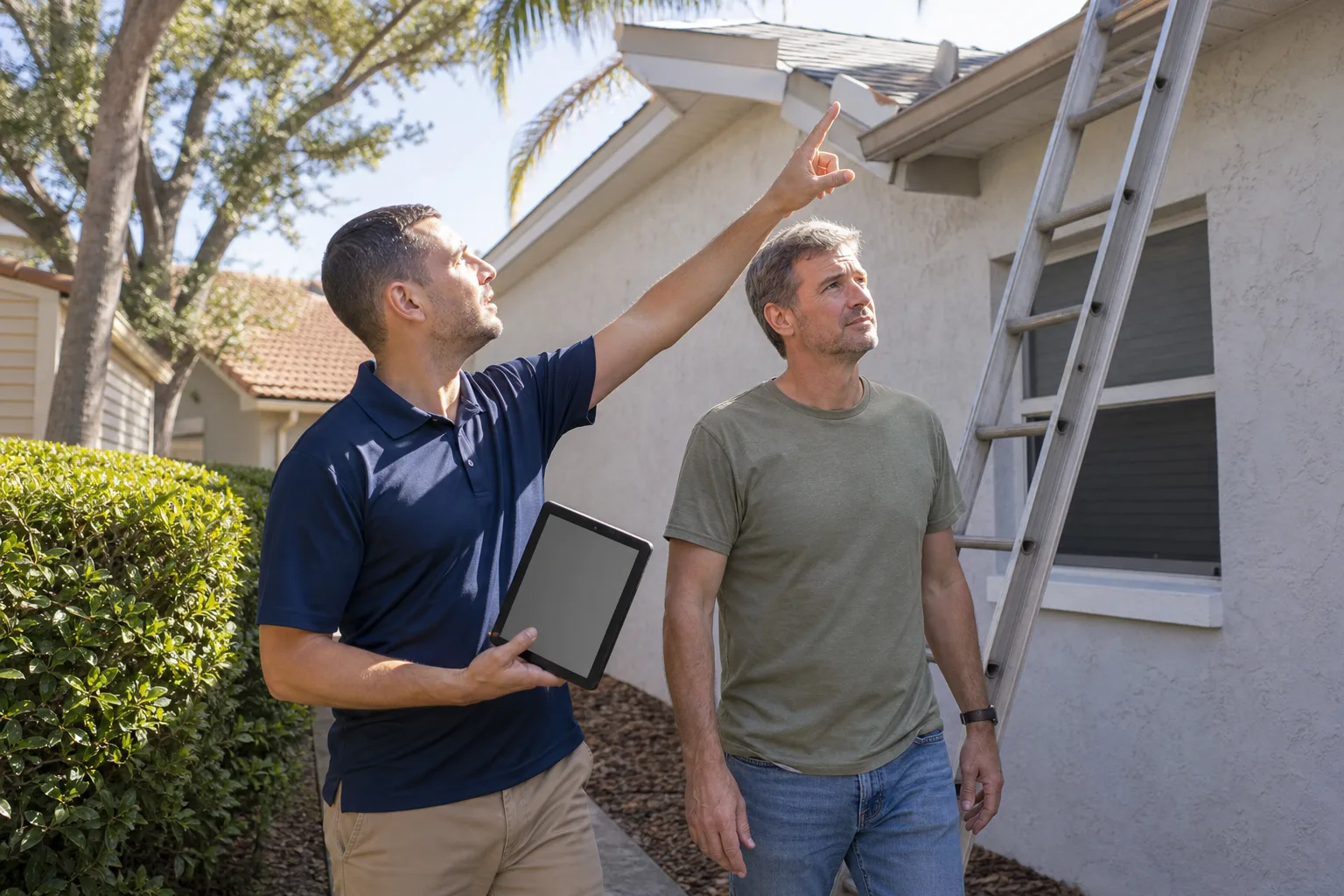
- Site visit and quote (1 to 5 days). A proper assessment measures the existing surface, checks slope and drainage, and identifies whether the base underneath is going to behave. A quote written from a photo is a guess. Budget a few days here for a written line-item estimate.
- Design and material selection (2 to 7 days). Paver style, color, pattern, and border detailing all get locked here. Changing your paver choice after the order is placed is the most common cause of a mid-project delay.
- Permit review (0 to 15 days, if required). In many cases a like-for-like driveway replacement doesn’t trigger a permit. Anything that changes the footprint, grade, or drainage pattern often does. El Monte projects near established drainage swales get extra scrutiny.
- Material lead time (3 to 14 days). Standard concrete pavers in popular colors are usually a few days out. Specialty colors, large-format slabs, and custom border runs take longer.
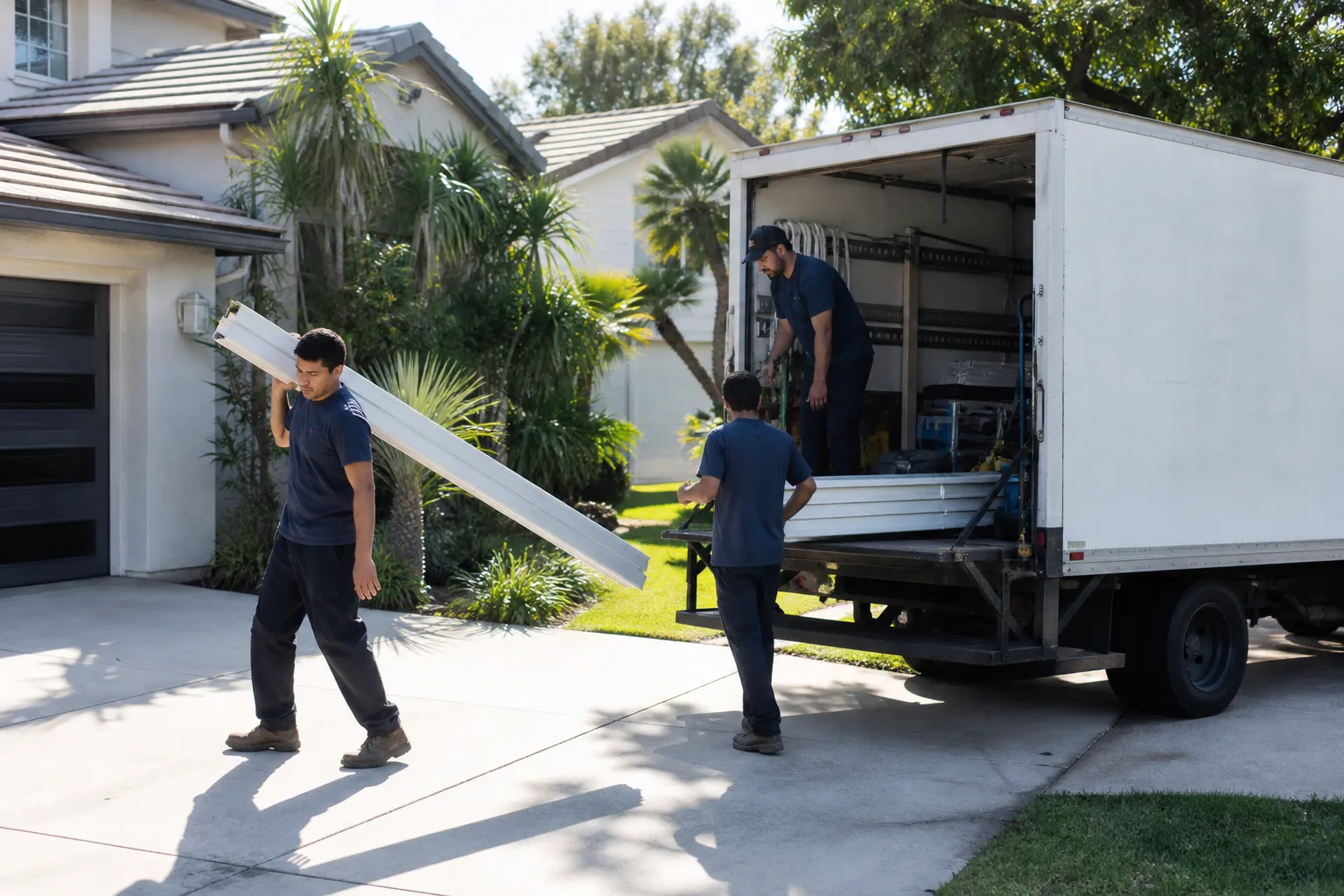
- Demolition and removal (1 to 2 days). Breaking out old concrete and hauling it off is hard, dirty work. A bonded driveway with a thick slab underneath can double this.
- Grading, excavation, and base (2 to 4 days). This is the phase most timelines understate. Excavating to depth, laying and compacting aggregate base in lifts, and setting edge restraint with proper slope away from the house takes real time.
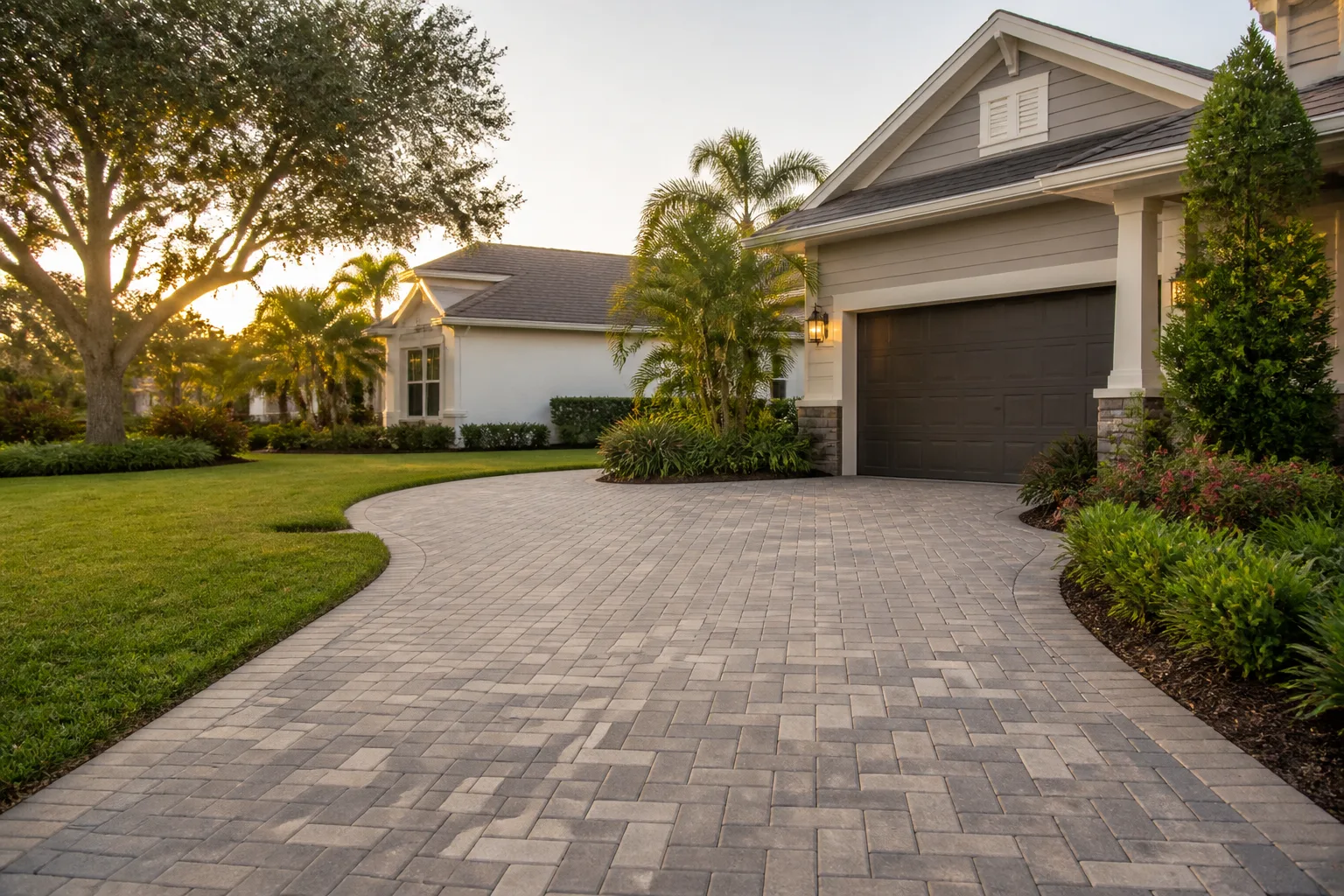
- Installation (3 to 6 days). Laying the pavers, cutting edges, and setting the pattern. A standard two-car driveway typically fits here.
- Cure and settling (72 hours minimum). No vehicles for roughly three days after joint sand and compaction. This is not optional.
Add it up and a clean, permit-free project lands near two weeks. Anything with a permit or a tricky grade runs three to four. When you’re ready to talk real numbers for your property, our team handles Driveway & Pavers in El Monte as a full-scope service from demolition to final compaction.
What LA Basin Weather Actually Delays Exterior Hardscape
Southern California’s reputation for endless sun is a scheduling trap. Exterior hardscape is genuinely weather-sensitive, and the delays aren’t the ones people expect. Understanding what actually stops work in the LA basin helps you plan around it instead of getting blindsided.
- Rain (adds 1 to 3 days, sometimes more). A single storm day isn’t the real cost. Wet ground means you can’t compact base properly, so you lose the storm day plus a drying day plus the compaction day. In El Monte, a winter storm can push a project scheduled for early in the week back by several days.
- Extreme heat (adds 1 day, or shifts the daily schedule). When the afternoon high pushes past 100 degrees, crews start earlier and shut down earlier. Installation isn’t stopped, but daily output drops. Late summer projects in the San Gabriel Valley regularly run a day longer than the same project in spring.
- Drainage season (a planning consideration, not a delay). If your project is scheduled for the cooler months, we build in weather-continuity days so a single storm doesn’t blow up the whole schedule.
- Santa Ana wind events (adds 0 to 1 day). Rarely a hard stop, but blowing dust and debris make fine finishing work and sanding joints harder.
The biggest weather mistake homeowners make is scheduling the project for the week before a major event. A family gathering on a Saturday means the driveway has to be done and cured by Friday, which means the whole project needs to wrap at least a week earlier than you’d think. Plan for the buffer, not the optimistic date. If you’ve ever noticed how quickly our dry seasons dry out ground, that’s exactly why summer projects often run smoother than fall or winter ones in El Monte.
What Adds Days: Driveway Size, Removal, and Grading Complexity
Two driveways of identical square footage can differ by four days because of what’s underneath and how water needs to leave. Here are the three variables that move the timeline the most, with realistic hour estimates.
Driveway Size
A single-car driveway (roughly 200 square feet) installs in about 2 to 3 days. A standard two-car driveway (roughly 400 to 600 square feet) takes 3 to 6 days. A large or shaped driveway with curves, widening, or multiple parking spaces can push installation to 7 to 10 days. The pattern also matters: a simple running bond lays faster than a herringbone or a complex circular pattern.
Existing Surface Removal
Removing a 4-inch poured concrete slab with no reinforcement takes 4 to 8 hours. Add wire mesh, rebar, or an older slab that’s bonded to the base and removal can stretch to 1.5 days. Old asphalt comes out much faster. If there’s a failed sub-base under the old driveway (and there often is), you’re now looking at removal plus replacement of the base, which adds 1 to 2 full days.
Grading and Drainage Complexity
This is where we see the biggest swings in El Monte. A flat lot with a straightforward slope away from the house is the easy case: 1 to 2 days. A driveway that has to shed water across a graded plane, tie into an existing swale, or handle a slope against the house can add 2 to 4 days. Reputable contractors won’t quote a flat 3-day install without seeing your grade, because the whole timeline lives or dies on drainage.
If your project is part of a bigger exterior plan, it’s worth reading about Fence Installation in El Monte too – sequencing fence and driveway work together often saves a week of to-and-fro on equipment and material staging.
The Cure and Settling Period: Why Rushing It Fails
Here’s the part of the timeline nobody wants to hear: for roughly 72 hours after the final compaction, you should not drive a vehicle onto new pavers. Not the minivan, not the work truck, not a quick pull-in to unload groceries. That cure hold is the single most important stretch of the entire project, and it’s also the phase most likely to cause early failure if ignored.
Here’s what’s actually happening during those 72 hours. The joint sand has just been placed and vibrated into the gaps. The pavers are fully interlocked and have skin-contact strength immediately, but the base layer underneath them still needs to finish settling tightly against the pavers above. Drive a vehicle onto it too early and you can shift pavers out of plane, misalign joints, or create a low spot that catches water for years. We’ve seen a “weekend-ready” driveway with a rushed cure end up with two rocking pavers within a month, which means pulling them, re-setting the base, and re-laying. That’s a full extra day of labor for a decision that saved a day of patience.
During the cure hold, keep foot traffic sensible and don’t wash the driveway. After 72 hours, vehicle traffic is typically fine. Full settling (meaning the pavers move around as little as they ever will under normal use) takes a few weeks; keep an eye out for seasonal joint sand loss that needs topping up.
- First 24 hours: No vehicles, no heavy foot traffic, no water.
- 24 to 72 hours: Foot traffic fine, no vehicles.
- After 72 hours: Vehicle traffic fine.
- First season: Top up joint sand if any settles out; a five-minute maintenance task.
Do You Need a Permit in El Monte?
Whether a permit is required depends on what changes, not just what’s replaced. In El Monte, and across most of LA County, a straight replacement of an existing driveway in the same footprint usually doesn’t trigger a permit. Anything that changes the size, the slope, or how stormwater leaves the property often does, and the review time is real. Budget up to two weeks for planning review on the complex end.
Common situations that pull a permit into play:
- Widening the driveway beyond the existing footprint
- Changing the grade so it affects how water flows toward neighboring properties
- Adding a driveway apron that ties into the public right-of-way (this often gets routed through the city and can take longer)
- Any project that changes the curb, gutter, or street-facing drainage connection
Any contractor who tells you “you never need a permit for a driveway” is either green or hoping you don’t check. We pull permits where they’re required and walk the inspection, and the timeline we quote reflects the wait instead of hiding it. If your project also includes a larger structure like an accessory unit, see how permits interact across the scope at Home Additions & ADU in El Monte.
Material Lead Time and Brand Choice
Material lead time is the quiet variable that turns a 2-week job into a 4-week job. In general, standard concrete pavers in common colors are 3 to 7 days out. Specialty colors, blended runs, large-format slabs, and custom shapes can stretch to 2 to 3 weeks, especially during peak building season. This is why we lock your material choice before scheduling demo, not after.
We partner with established manufacturers on the hardscape side, including Belgard, and the same principle holds across our other trades – the brands we recommend are chosen because they perform and they ship reliably, not because they’re simply available. If you’ve researched modern prefab options like Boxabl for accessory structures, you already know that quality fabrication carries lead time; pavers are no different. Great product choice pays you back in years of durability, and it’s part of why every Groundwork project is covered by our 730-Day Done Right Promise: if the workmanship doesn’t hold, we make it right, and that guarantee is written long after the material delivery date.
Two practical rules to keep the schedule intact:
- Order the material before demo starts. Once the old driveway is gone, the clock is running and the site is exposed.
- Confirm the actual delivery date in writing when you sign, not just the style and color. A quoted “about a week” becomes an actual date on the schedule.
Questions to Ask a Contractor Before You Trust the Timeline
A realistic quote and a sales quote can look identical on paper. These are the questions that separate them, and you should ask every contractor who bids your project.
- “Does your timeline include the permit wait and the cure hold, or just the installation days?” If the answer is just installation, the number on the contract isn’t the number of days you’ll live with a torn-up driveway.
- “How many days are you budgeting for grading and base?” A real number is 2 to 4 days. A one-day answer means the base is being rushed.
- “What’s your lead time on the paver color and pattern I chose?” Get it in writing with an actual date.
- “What’s your rain plan?” Any contractor working in the LA basin needs a defined answer, not a shrug.
- “What happens if you uncover a failed sub-base?” This is the most common “change order” surprise. Ask whether the base is included in the quote or billed separately.
- “Can I see a written line-item quote?” A one-line price is not a quote. A written, itemized estimate lets you compare apples to apples.
- “What does your warranty actually cover, and for how long?” Ask for the number of days and the fine print, not a handshake promise.
In our experience across El Monte, the contractors who answer all seven of those questions in writing and without squirming are the ones whose quoted timeline tends to be close to reality. The ones who get defensive about question five are telling you something too.
Common Mistakes to Avoid
- Scheduling around an event instead of building in the buffer. If the Saturday gathering is fixed, the project needs to wrap at least a full week earlier than the optimistic date. Assume at least one weather or scheduling hiccup.
- Betting the schedule on a same-day start. Complicated projects don’t start the day you sign. A serious contractor will move a crew to a site only after material is staged and any permits are cleared, and a quote that promises otherwise is a red flag.
- Skipping the base inspection. In established El Monte neighborhoods, we regularly find old driveways installed over thin, clay-heavy soil that has shifted over decades. If the same base is reused, the pavers above will fail within a couple of seasons.
- Driving on the driveway before the cure hold is up. This is the number one cause of early paver failure. Three days of patience saves years of rocking pavers.
- Ignoring how the driveway drains. A paver driveway that pushes water toward the house, the fence line, or a neighbor’s lot is a future problem. Slope and drainage must be engineered, not eyeballed.
- Changing paver choice mid-project. Every material change resets the delivery clock and, often, the color runs on already-installed border pieces. Lock the choice before demo.
- Accepting a verbal quote. In a market this busy, an email trail matters. Ask for a written, line-item estimate with a defined cure hold and warranty period.
See the difference
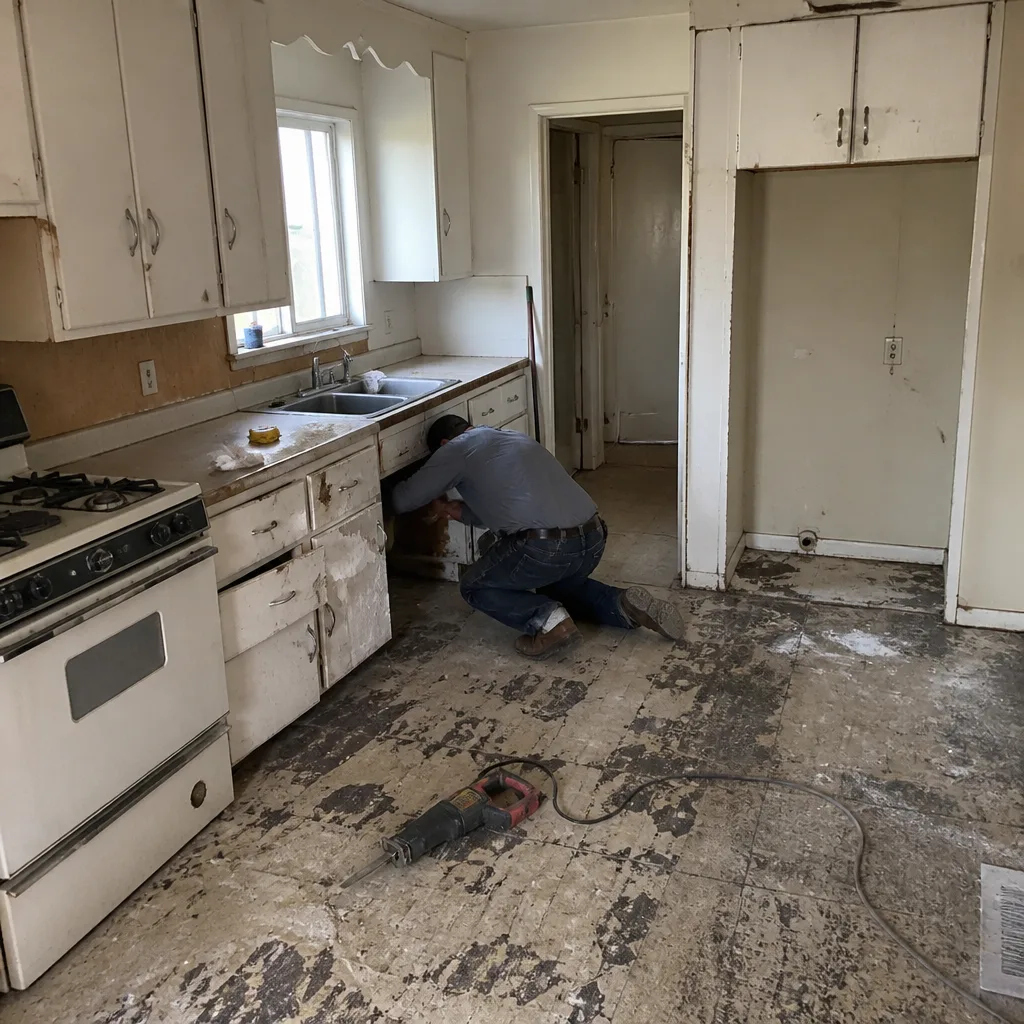 Before
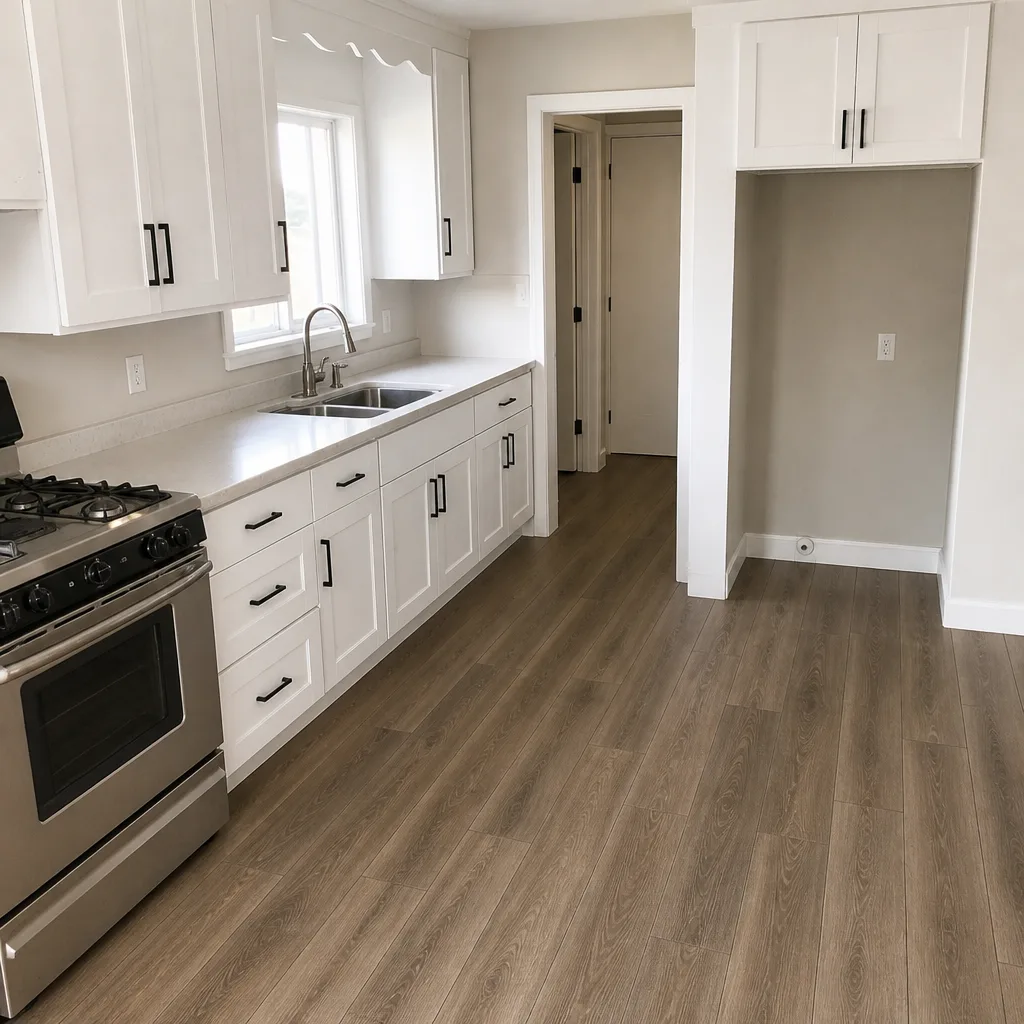 After
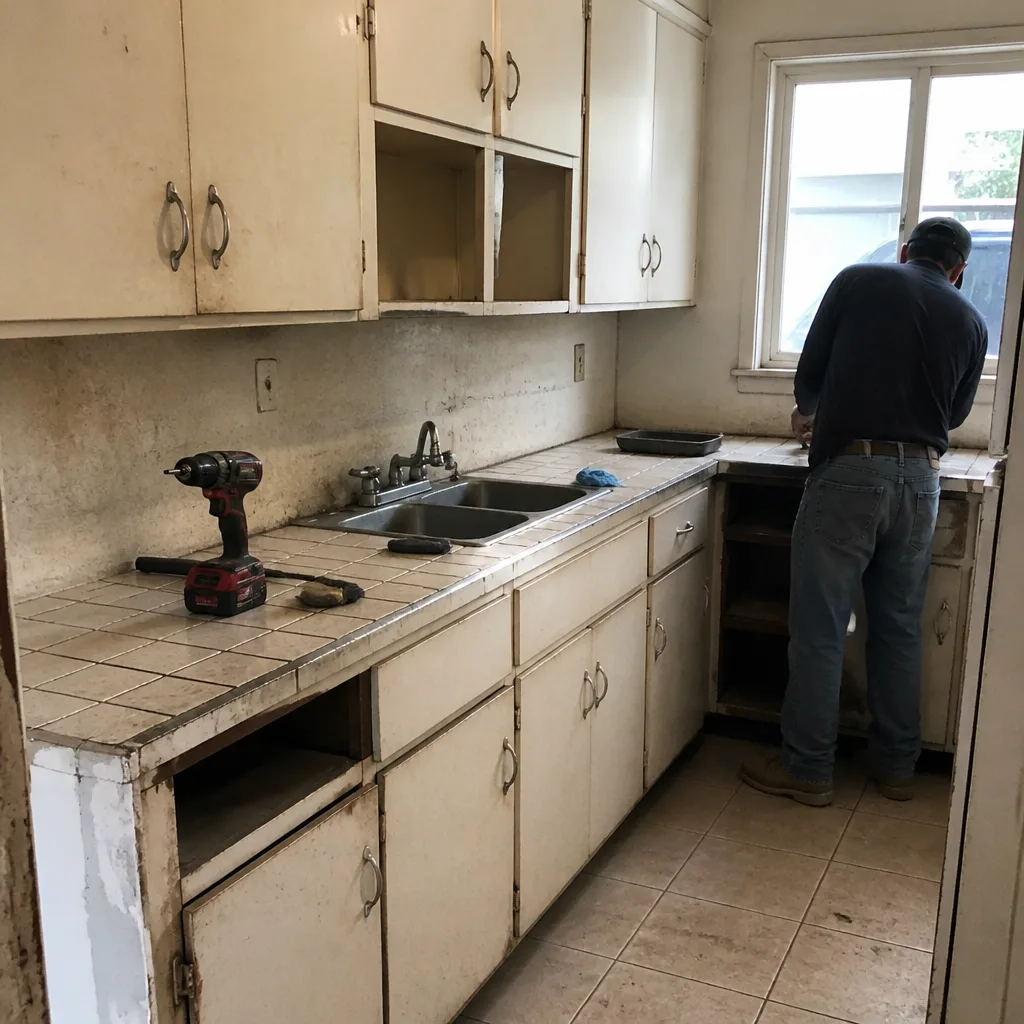 Before
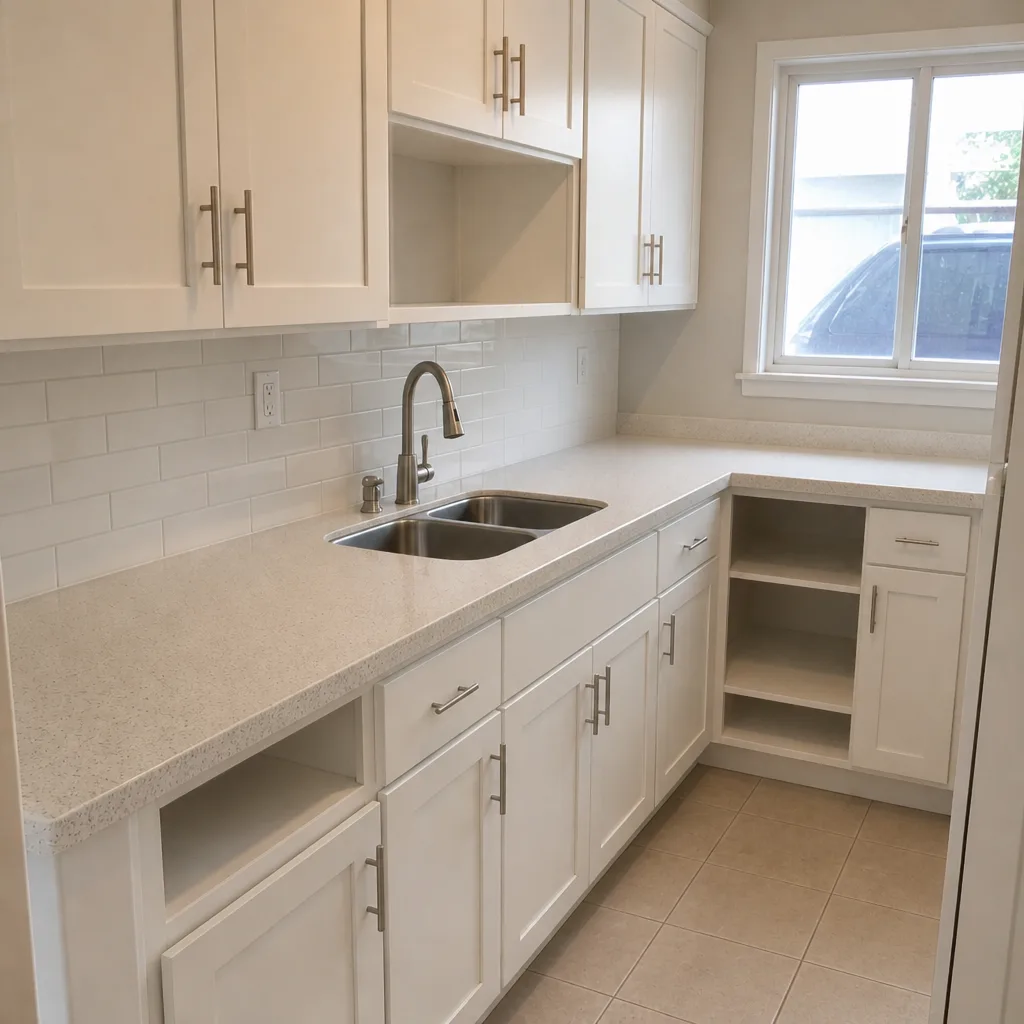 After
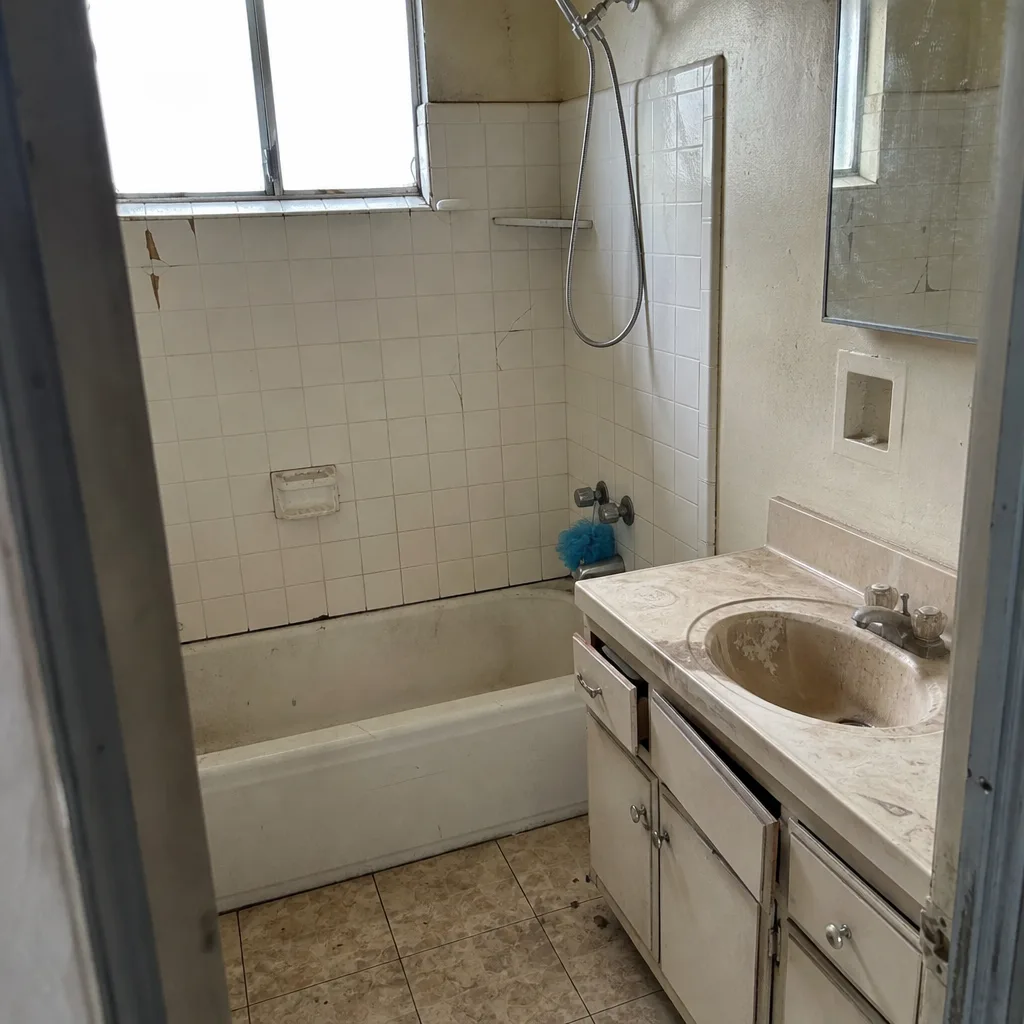 Before
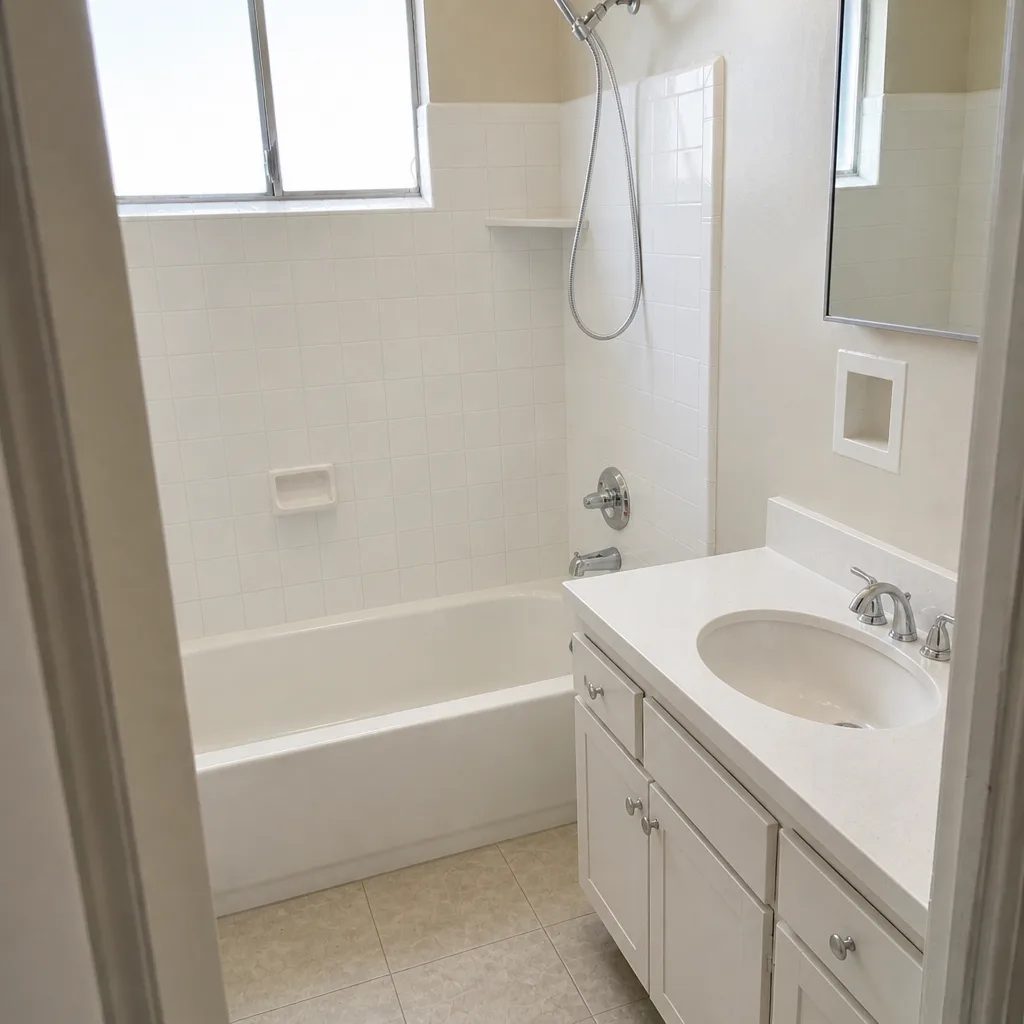 After
When to Call a Professional
Some driveway work is cosmetic and patient; some is genuinely hazardous or technically demanding. If your project involves cutting through an old bonded concrete slab, excavating near a gas line or utility line, managing a steep slope, or installing a driveway that has to handle serious drainage, call a professional. Paver installation done badly isn’t just ugly – it’s a safety and water-management problem. A driveway that sheds water toward the foundation, a base that wasn’t compacted correctly, an edge restraint that fails – those outcomes can cost far more to fix than the original install cost to do right the first time. Structural, high-load concrete or bonded projects also genuinely require experience that a weekend crew doesn’t have.
Groundwork Construction Co. of El Monte offers free estimates in El Monte – call (888) 271-7872. We’ll walk your property, check your grade and base honestly, and put a written timeline in front of you that includes every phase of the project, not just the days the crew is laying pavers.
Frequently Asked Questions
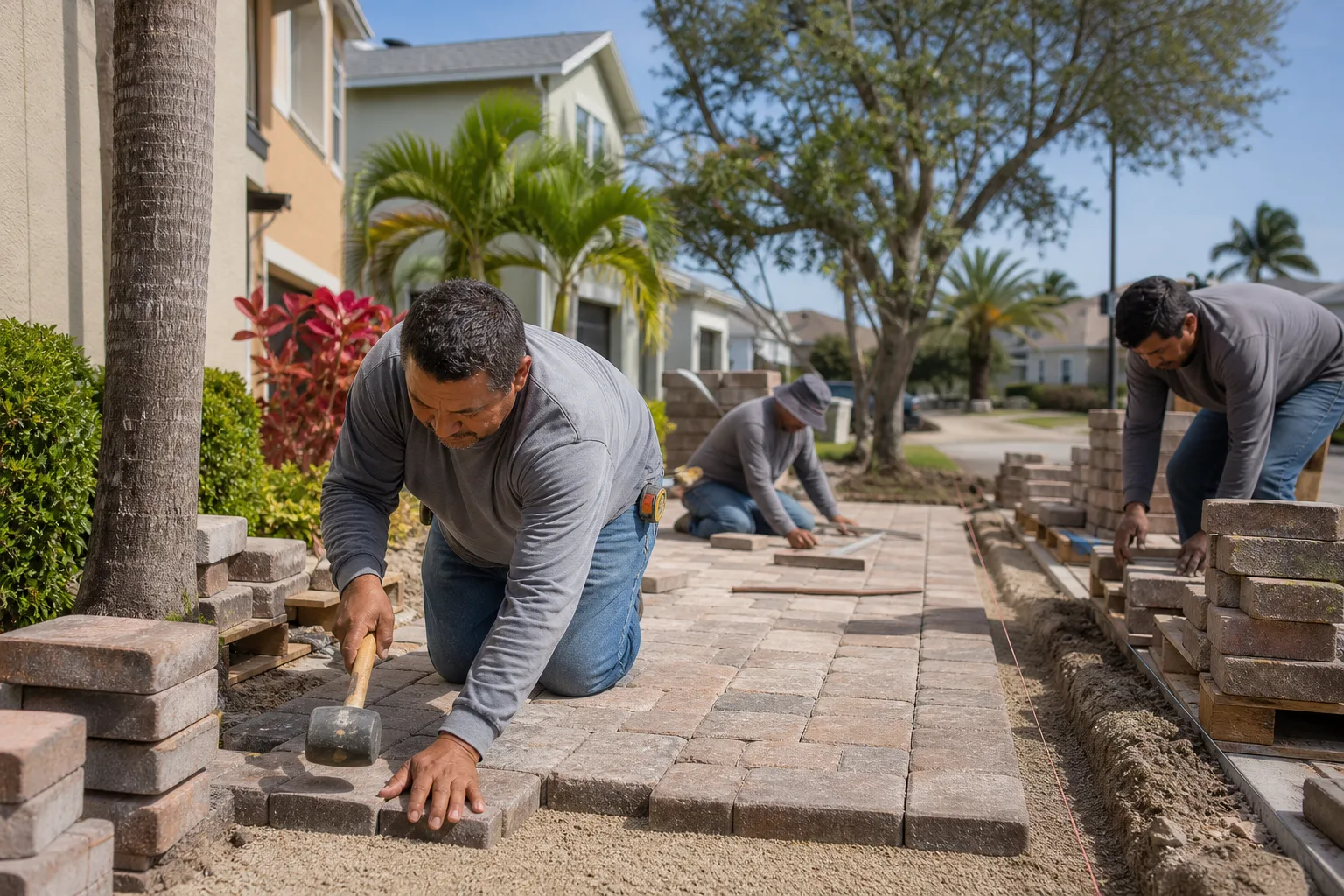
Installation typically takes 3 to 6 days for a standard two-car driveway, plus 72 hours of cure time before vehicle traffic. The full project, including quote, material lead time, demolition, and grading, usually runs 2 to 4 weeks from first site visit to first park. Call (888) 271-7872 for a specific estimate on your property – estimates are free.
Only in narrow cases, and it’s rarely the right move. Paving over an old slab works only if the old slab is structurally sound, already drains correctly, and has room for a paver height that doesn’t create a trip hazard or drainage problem. In most El Monte properties we survey, the existing base has failed enough that removal and rebuild is the safer investment. Rushing a pave-over is exactly how early paver failure happens.
Not on our projects. We price the full scope up front with a written line-item estimate, so the number you see is the number you pay. The one real exception: if we uncover a failed sub-base or undocumented utility line after demolition, we stop, show you what we found, and get your approval before any scope change. No surprise change orders – upfront pricing, no surprises.
A single-car driveway (about 200 square feet) installs in 2 to 3 days. A large or circular driveway with complex patterns can push installation past a week, and the grading work often adds several days on top. Complex patterns and curves take longer because every piece has to be cut and set precisely.
Late-summer afternoon highs in the San Gabriel Valley regularly push past 100 degrees, which shortens the working day and adds roughly a day to projects scheduled in July and August. Crews start earlier, and finishing work happens before the worst heat. Scheduling for spring or fall typically gives you the smoothest timeline.
Yes – we offer 0% financing for 18 months, plus $1,000 off projects over $10,000, so a large driveway project doesn’t have to wait for the bank account to catch up. Our goal is to make big-scope work accessible without hidden financial surprises. Call (888) 271-7872 to talk through the numbers and schedule a free estimate.
The Bottom Line
The number to memorize isn’t “three to five days” – it’s 2 to 4 weeks from first site visit to first park, with the 72-hour cure hold as the hard boundary at the end. Most of those days are prep, not paver-laying: quote and design, permits, material lead time, demolition, grading and base compaction. Weather, driveway size, and what’s under the old surface each add real days, and a professional who quotes the full clock is telling you the truth. Groundwork Construction Co. serves El Monte with upfront pricing, a 730-Day Done Right Promise, and a written timeline that includes every phase. When you’re ready, call (888) 271-7872 for a free estimate. See all our services at the Groundwork Construction Co. of El Monte home page.
Written by the team at Groundwork Construction Co. of El Monte.